


From Static Pages to Living Digital Partners
By Kevin Cale, Executive Director, Experience Strategy & Innovation, eDesign Interactive
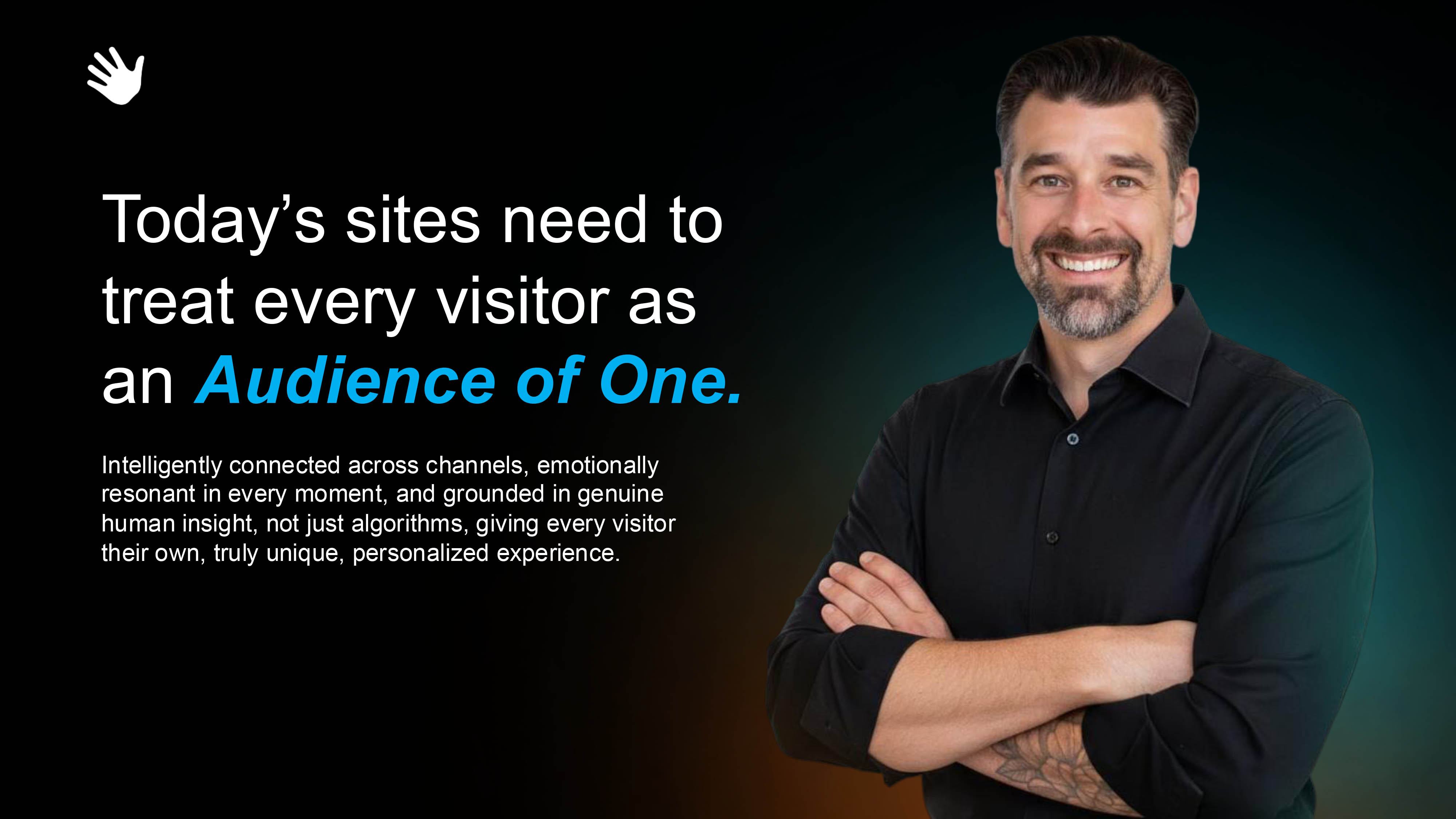
A website in 2027 is no longer just a digital brochure. It acts as an intelligent business partner that can think, adapt, and assist in real time. The boundaries between a “site” and an “agent” are quickly fading. Powered by large language models (LLMs) and real-time data feedback, the modern website does more than display content. It understands each visitor, engages in dialogue, and continuously learns how to deliver better experiences.
The era of generic click‑through journeys is ending, giving rise to intelligent, intent‑based experiences designed for the Audience of One.
Below are the key trends transforming how organizations build and experience the NEW web.
1. The Website Becomes an Online Agent
By 2027, websites will act less like content containers and more like active participants in user engagement. With built-in LLMs, they do more than inform. They interact, assist, and guide.
Your website will:
● Answer complex customer questions in real time
● Act as a brand-trained digital assistant that mirrors your company knowledge
● Adjust conversation flow based on each visitor’s goals and tone
● Adapt visuals, layout, and messaging according to user context
● Deliver an “Audience of One” experience that feels personal and intuitive
Instead of navigating menus and pages, users will interact through natural conversation through voice or text prompting. The website becomes an always-on, always-learning strategic partner, directly connected to the core of your brand.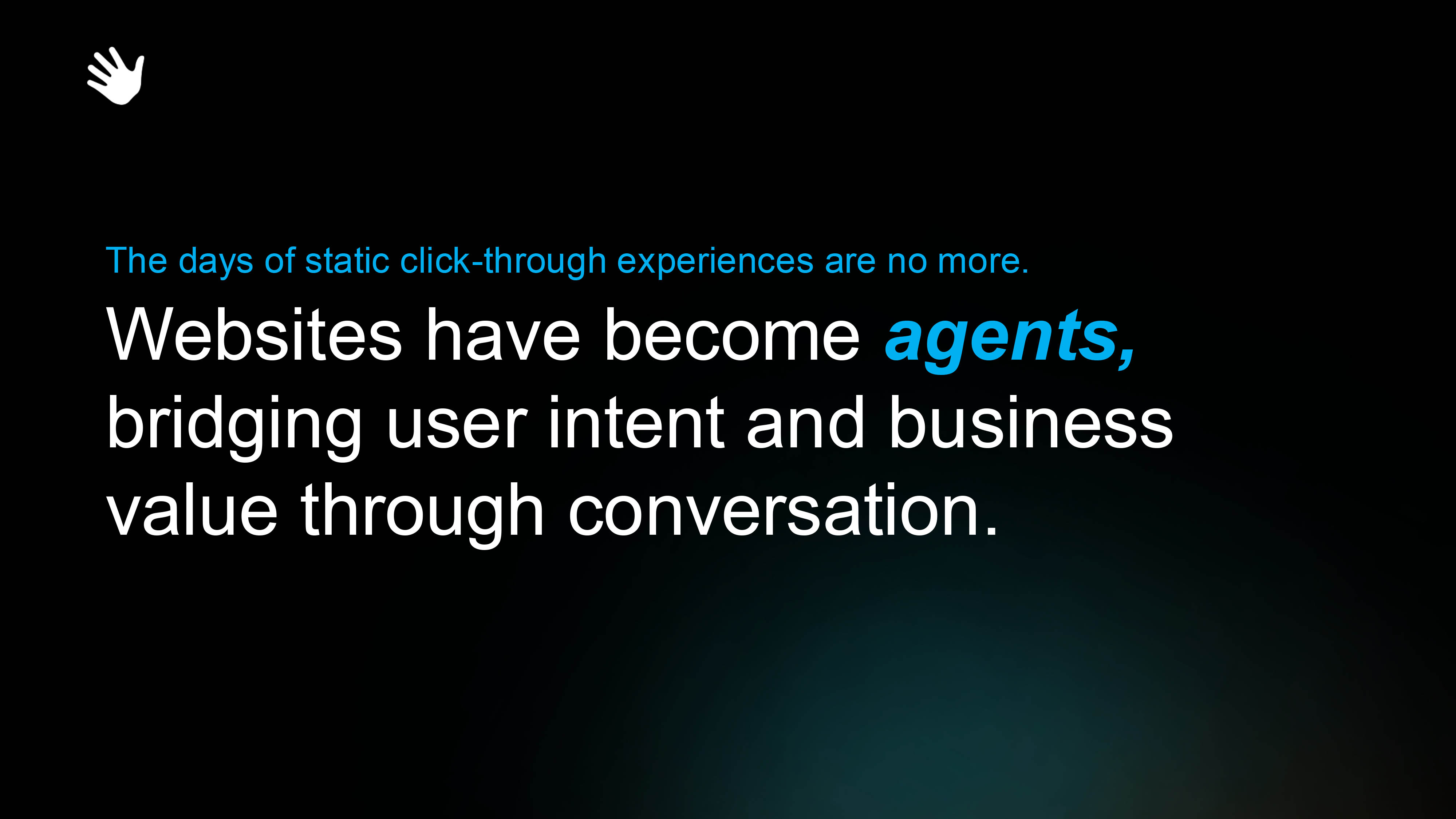
“The 2027 website is no longer a platform. It is a living presence that listens, speaks, learns, and grows with your business. It authentically supports visitors in achieving their goals while strengthening trust and relationships that turn customers into advocates for your brand. In the end, it unlocks scalable growth by aligning intelligent experiences with real human needs.” —Kevin Cale
2. Living Design Systems Take Over
Design systems are evolving from fixed pattern libraries into adaptive ecosystems. In 2027, they are guided by artificial intelligence and user data that shape the interface in real time. Content served to each user will be tailored to create a more personalized experience.
Expect to see:
● Layouts, visuals, even tone of voice will adapt to audience behavior, response, and device type
● Continuous optimization led by AI experiments and performance data
● Seamless alignment between brand, UX, and conversational design
● Design tokens that update automatically based on context
The result is a living system that refines itself every day, staying consistent with the brand while responsive to how people actually use it.
3. Data Fuels Personalization (And Ethics Define It)
Data remains the foundation of meaningful digital experiences, but the focus has shifted toward trust and transparency. Businesses are prioritizing first-party data collection that creates direct relationships with their audience.
Future-ready sites will use:
● Predictive modeling to anticipate what each visitor needs
● Behavioral insights that power personalization in real time, making each site visit unique to that user
● Transparent consent processes that build long-term credibility
Personalization is still a priority, but in 2027, it is defined by ethics and respect for the user’s control over their own data.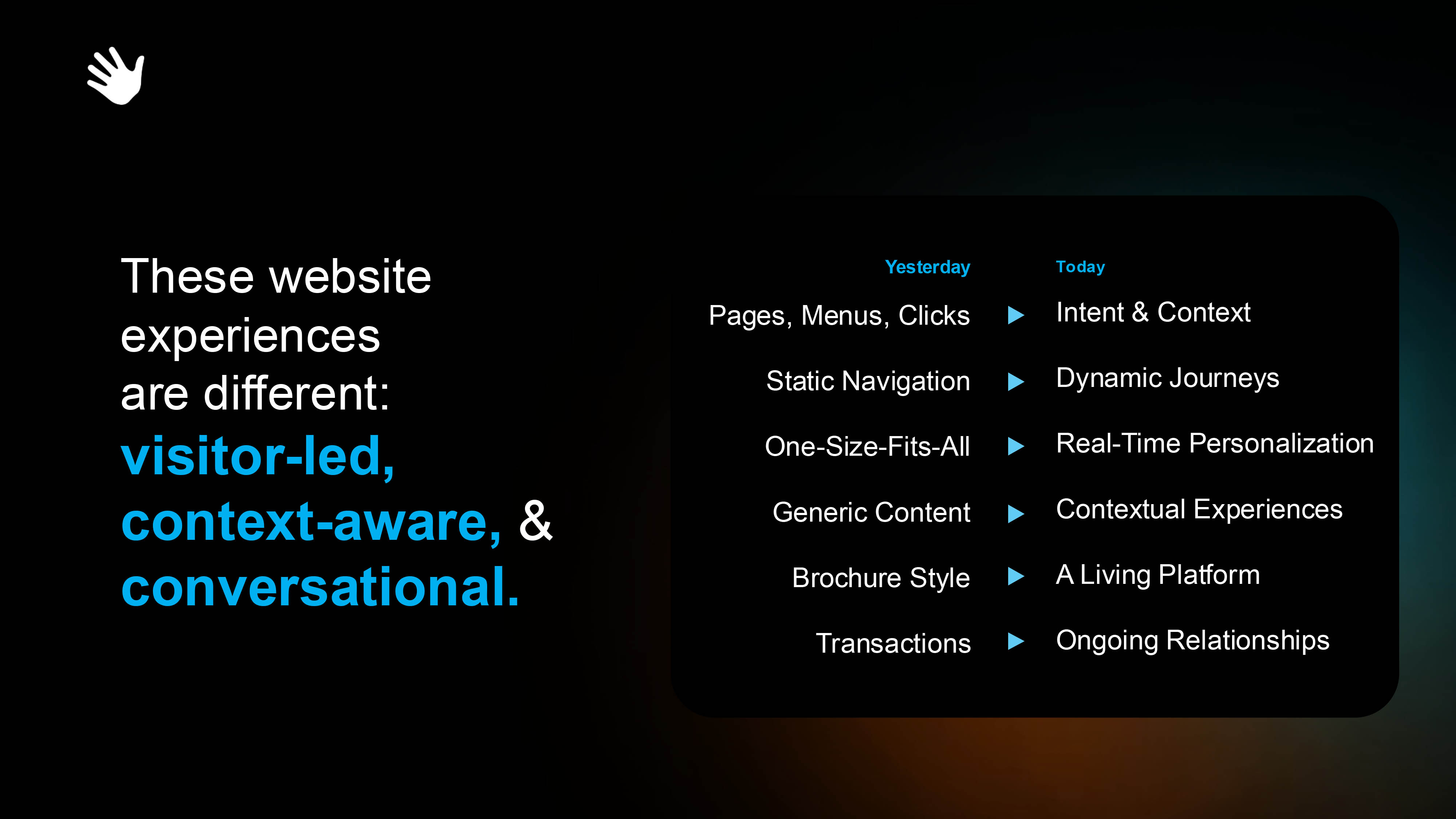
4. Content Still Wears the Crown
Even as AI assists with creation and delivery, human storytelling is more important than ever. LLMs need well-structured, high-quality content as their foundation. In 2027, great content combines strategy, empathy, and clarity.
Strong content will be:
● Modular and structured for machine and human use
● Authored with emotional intelligence and a clear brand voice
● Designed for reuse across formats such as chat, video, and voice
● Created with a balance of creativity and data insight
Your story remains your strongest differentiator. AI enhances delivery, but your content defines meaning.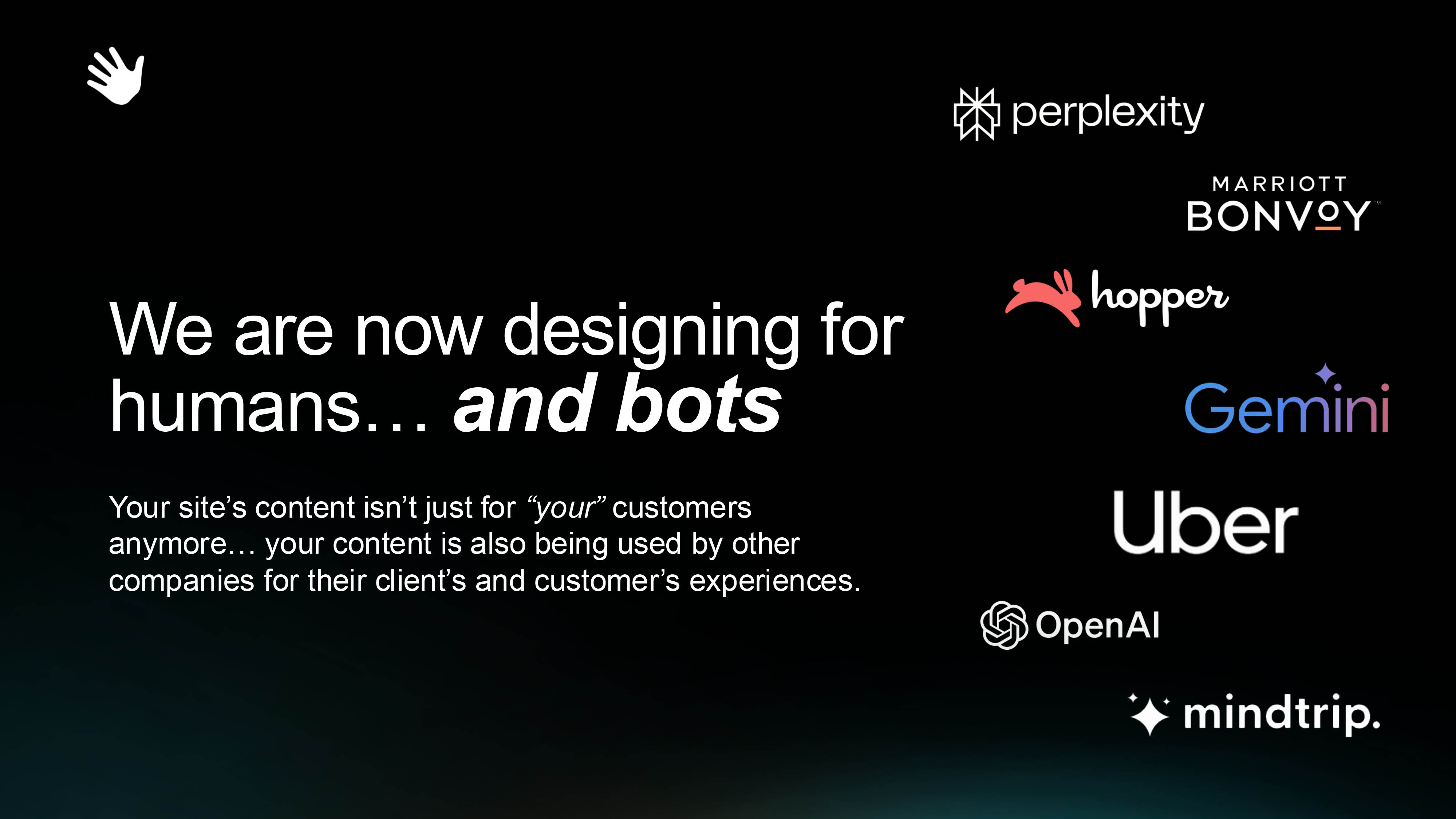
5. Designing for Humans and Machines
Websites now serve two audiences: people exploring your brand and intelligent systems interpreting your content. Designing for both means combining creativity with structured logic.
This approach includes:
● Structuring data and metadata for better search and AI understanding
● Building user journeys that integrate chat, voice, and visual experiences
● Training your digital agent to reflect your brand tone and knowledge
● Testing both human usability and algorithmic readability
The best-performing websites are those that communicate with equal clarity to both people and the intelligent systems that interpret them online. Your content no longer serves only human visitors. It also informs the way other AI agents experience, reference, and represent your brand within their own digital ecosystems. In this new landscape, your website becomes part of a broader network of intelligence, shaping not just direct interactions with users but also how other digital entities perceive and present your company.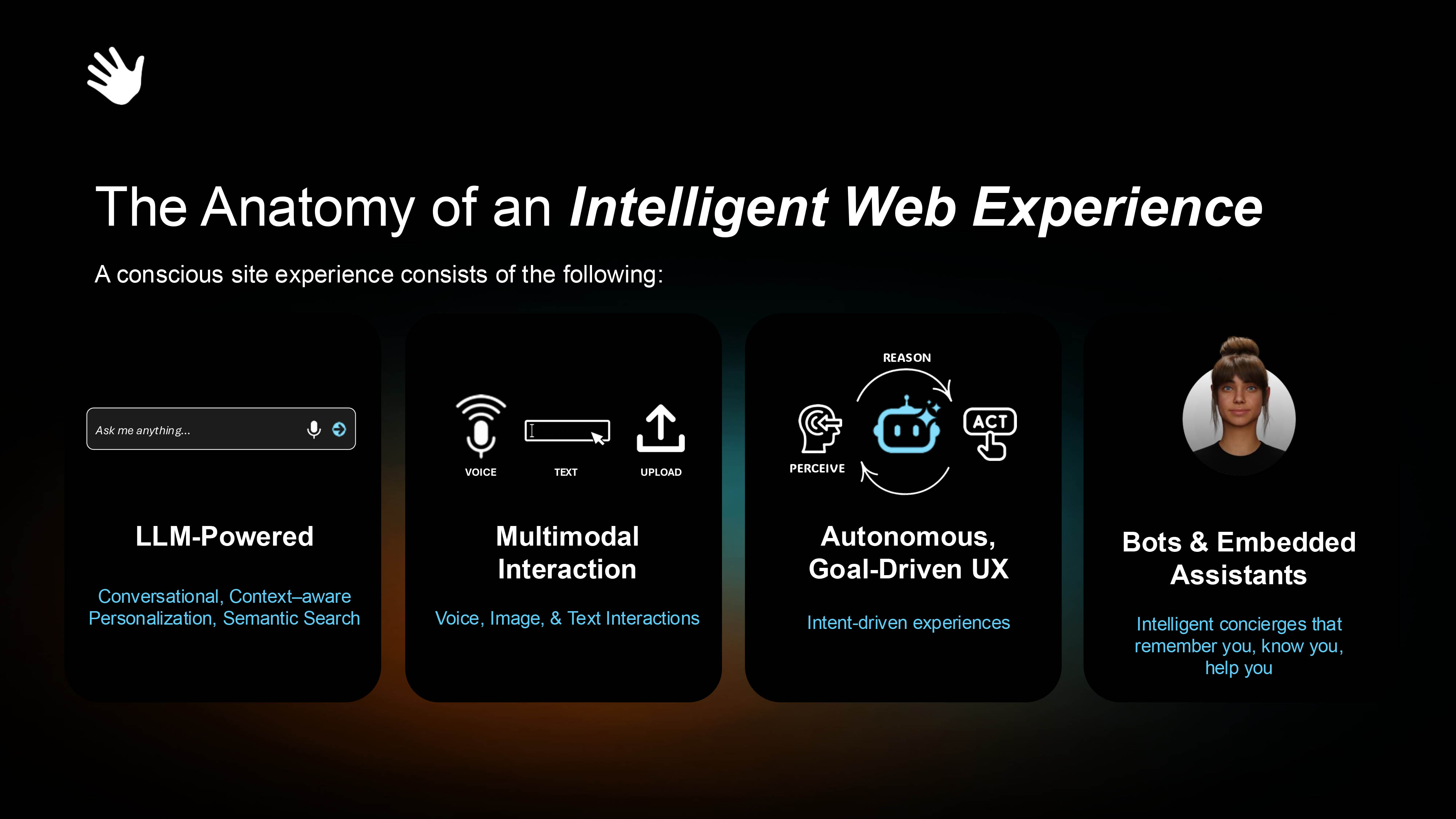
6. The Rise of the Multi-Modal Experience
The future of digital interaction is conversational and multi-modal. Websites are moving away from traditional click-through journeys toward dialogue-driven, collaborative experiences.
Visitors can now:
● Speak directly to your site using natural voice input
● Chat in plain language to get answers, recommendations, or solutions
● Upload files, images, or documents for the site to analyze and respond to
● Move seamlessly between voice, chat, and visual interaction on any device
This new model turns websites into responsive environments where users can express themselves naturally through voice, text, or visual inputs and receive intelligent, context‑aware replies. As interactions become more intuitive and human‑like, visitors feel comfortable engaging in honest and transparent communication. The result is more authentic connections and richer, higher‑quality data that reflects true user intent and builds greater trust between people and brands.
eDesign Interactive is pioneering the next generation of Intelligent Web Experiences. Reach out to us today to see a live demo and discover how your website can think, learn, and engage like never before.