


Here's What the AI Era Demands From Your Digital Presence
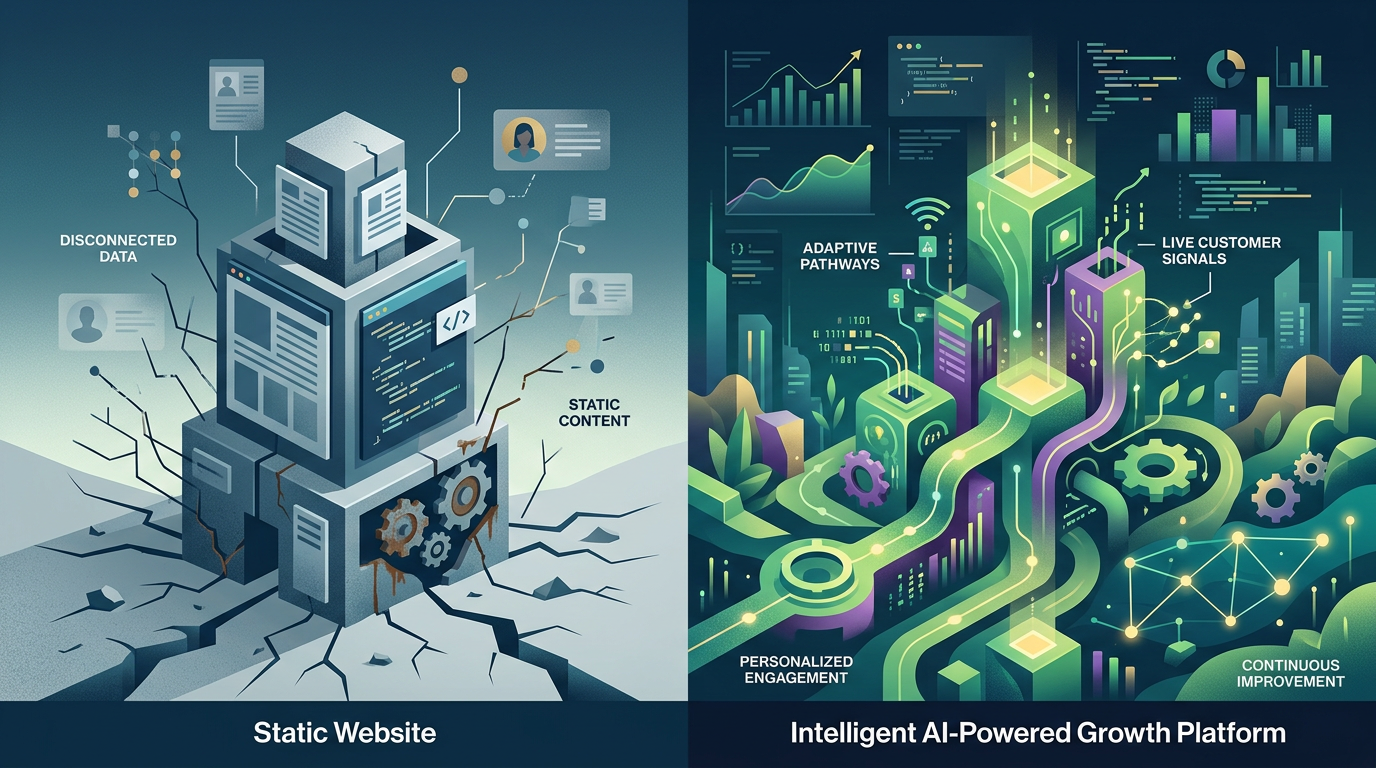
You can usually feel it before you can measure it.
Traffic isn't growing the way it used to. Campaigns require more budget to produce the same results. New competitors seem to appear overnight, and somehow, they're outranking, out-converting, and outpacing brands with far fewer resources.
At first glance, it looks like a marketing problem.
But more often, it's an infrastructure problem.
Something fundamental has changed in how digital experiences are built, personalized, and optimized. The shift isn't cosmetic. It isn't about choosing a new color palette, refreshing your homepage, or adding another feature to your website.
The entire framework for digital success is evolving. And for many brands, the gap between their digital presence and new customer expectations is growing wider every day.
Redesigns Fix the Wrong Layer
When a website underperforms, the instinct is to refresh the surface. New layout. New photography. New animation. A cleaner homepage.
None of that touches the layer that actually decides whether you win.
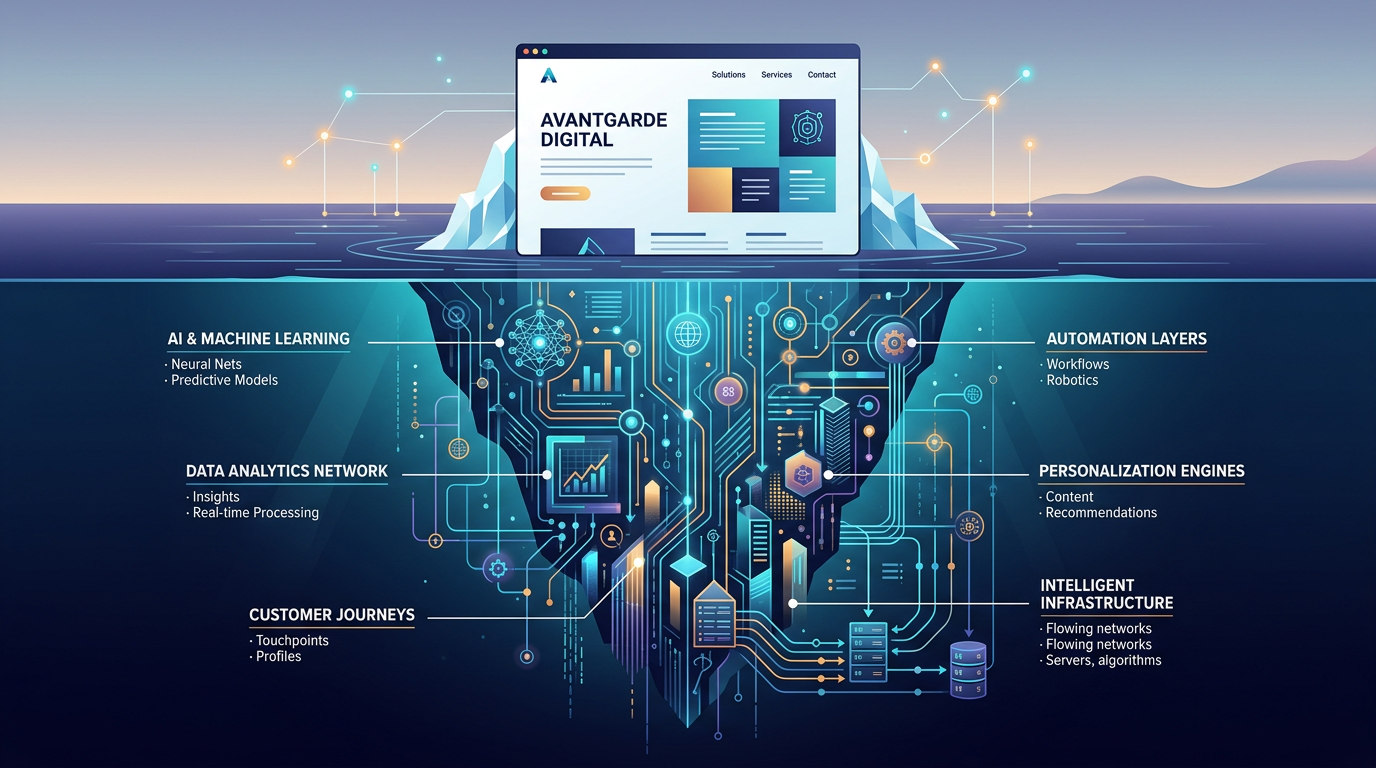
Here is what we mean by infrastructure, in plain terms. It is the set of systems that sit behind the pixels:
● A data foundation that knows who a visitor is, what they have done before, and what they are trying to do now.
● Integration between your site, your CRM, your marketing automation, and your analytics, so that behavior in one place informs decisions in another.
● A personalization engine that can change content, messaging, and conversion paths based on that data.
● A testing and optimization framework that turns every visit into a measurable experiment.
A site can look beautiful and have none of this. When it does, it delivers the same experience to every visitor, learns nothing from any of them, and falls a little further behind every month. The design is not the liability. The empty layer underneath it is.
Your Website May Be Costing You More Than You Think
A website that looked cutting-edge in 2021 can quietly become a liability. Not because the design suddenly became unattractive. Because customer expectations evolved faster than the website did.
Think about how people interact with technology now.
Netflix recommends what they'll watch next. Spotify curates personalized playlists. Amazon predicts what they'll buy. AI assistants answer questions instantly and adapt to individual needs.
These experiences have changed what people expect from every digital interaction.
Yet many business websites still deliver exactly the same experience to every visitor. The same messaging. The same calls to action. The same journey. Regardless of who the visitor is or why they arrived.
That's where the disconnect begins.
The digital experiences we create are increasingly powered by intelligent systems that understand context, personalize interactions, and continuously improve based on user behavior.
Google Cloud's AI research highlights how organizations are using AI to create highly personalized customer experiences that adapt in real time. Instead of treating every visitor identically, these systems respond dynamically to customer intent, behavior, and preferences.
The difference between a static website and an intelligent digital experience isn't incremental.
It's transformational.
Personalization Is Becoming the Baseline.
One of the biggest misconceptions in digital marketing is that personalization is still considered innovative.
Increasingly, it's simply expected.
Consider the example of Indeed. The company used AI to help job seekers understand why specific opportunities matched their skills and experience. Instead of simply displaying listings, Indeed added context and relevance to the decision-making process.
The result? Applications increased by 20%, while employer hires improved by 13%.
The lesson extends far beyond recruiting. People don't want more information. They want more relevant information.
Imagine two visitors arriving on your website. One is researching solutions for the first time. The other is an existing customer exploring additional services. Should they really receive the exact same experience?
Modern websites can personalize content, recommendations, messaging, and conversion paths based on user behavior and intent. Brands that embrace these capabilities will increase engagement, conversions, and customer satisfaction simultaneously.
That's why personalization is rapidly shifting from a differentiator to a requirement.
Your Campaign Budget Is Being Outworked
For years, digital marketing followed a relatively straightforward formula. Better creative plus bigger budgets typically produced stronger results.
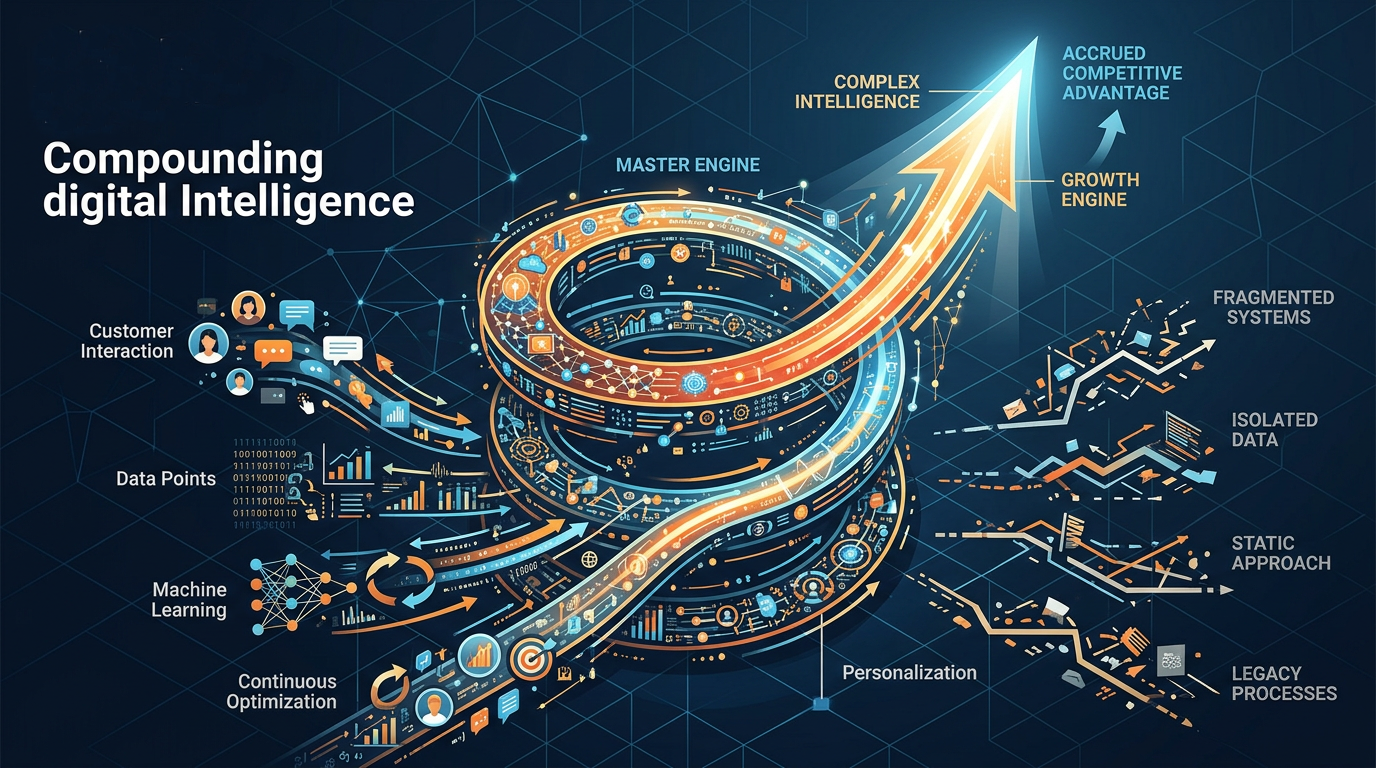
Today, that equation is changing. The organizations generating the strongest returns aren't necessarily spending more. They're building smarter and more connected ecosystems.
AI-powered marketing platforms can analyze historical performance data, identify emerging audience behaviors, generate creative variations at scale, and optimize campaigns while they're still running.
The new competitive advantage isn't budget. It's intelligence.
A competitor with a smaller budget but a more intelligent digital infrastructure can often outperform a larger organization relying on traditional campaign strategies.
OpenAI's enterprise research consistently highlights a pattern among successful organizations adopting AI: the greatest gains don't come from deploying the most advanced technology on day one. They come from organizations that start early, learn continuously, and allow improvements to compound over time. Every month that a smarter system operates, it becomes more effective. Every month, a static system falls further behind.
What a Modern Website Actually Needs to Do
This is where many organizations get stuck.
The conversation around website redesigns often focuses almost entirely on aesthetics. And aesthetics still matter.
At eDesign Interactive, we've spent more than two decades creating award-winning websites, interactive campaigns, eCommerce experiences, and digital platforms. We understand the value of exceptional design because great design creates emotional connection, trust, and engagement.
But today, design alone is not enough.
A modern website must function as an intelligent business platform.
And perhaps most importantly, it needs a foundation that can adapt as technology continues to evolve.
The Campaign You're Running Should Be a System (and not a Snapshot)
One of the most expensive habits in digital marketing is treating campaigns as isolated projects.
Launch. Measure. Report. Move on.
The problem with this approach is that valuable insights often disappear when the campaign ends.
Our team at eDesign Interactive takes a different approach.
We treat campaigns as living systems. Every interaction generates data. Every conversion reveals customer behavior. Every test creates learning opportunities. And every campaign contributes to improving the next one. This creates a cycle of continuous optimization that compounds over time.
Lowe's demonstrated this approach through its AI-enhanced product search and tagging initiatives, improving product tagging accuracy and significantly reducing errors.
Similarly, Morgan Stanley integrated AI into advisory workflows and continuously refined the experience, resulting in widespread adoption across the organization and dramatically faster client response times.
Neither company succeeded because they implemented a single tool. They succeeded because they committed to building systems that improve continuously.
That's the mindset modern digital marketing requires.
"Do We Need a New Website?"
Most organizations are asking us the wrong question. They ask: "Should we redesign our website?" A better question is: "Is our digital infrastructure helping us learn faster than our competitors?"
Because websites are not static marketing assets. They're business systems. And business systems either create competitive advantage, or they don't.
When evaluating an agency, portfolios and case studies remain important, but they're not enough. The more revealing question is whether your agency understands how to build digital experiences that become more valuable over time:
● Can they tell you how the site will perform six months after launch, not just how it will look on day one?
● Can they integrate design, development, data, AI, and conversion optimization into a single strategy rather than four disconnected ones?
● Can they build a foundation that evolves with your business rather than freezing it in this year's trends?
The agencies equipped for the AI era are helping brands build long-term digital advantages.
The Advantage Compounds
The benefits of an intelligent digital experience are not fixed. They accumulate. Every interaction adds intelligence. Every campaign adds insight. Every optimization raises the floor for the next one. Small improvements stack into a lead that a competitor running snapshots cannot close, because they are starting over each time, and you never are.
Five years ago, a website was a marketing asset. Today, it is a growth platform. Soon, it will be an intelligent business system. The gap between those three things is the gap between you and whoever is outpacing you right now.
Is your website evolving fast enough to keep up?
If not, let’s talk. Contact us to explore how we can transform your website into a smarter, high-performing digital experience.
Your website doesn't just need to look better. It needs to work harder, learn faster, and become more valuable with every interaction. That's what the AI era demands from your digital presence.