


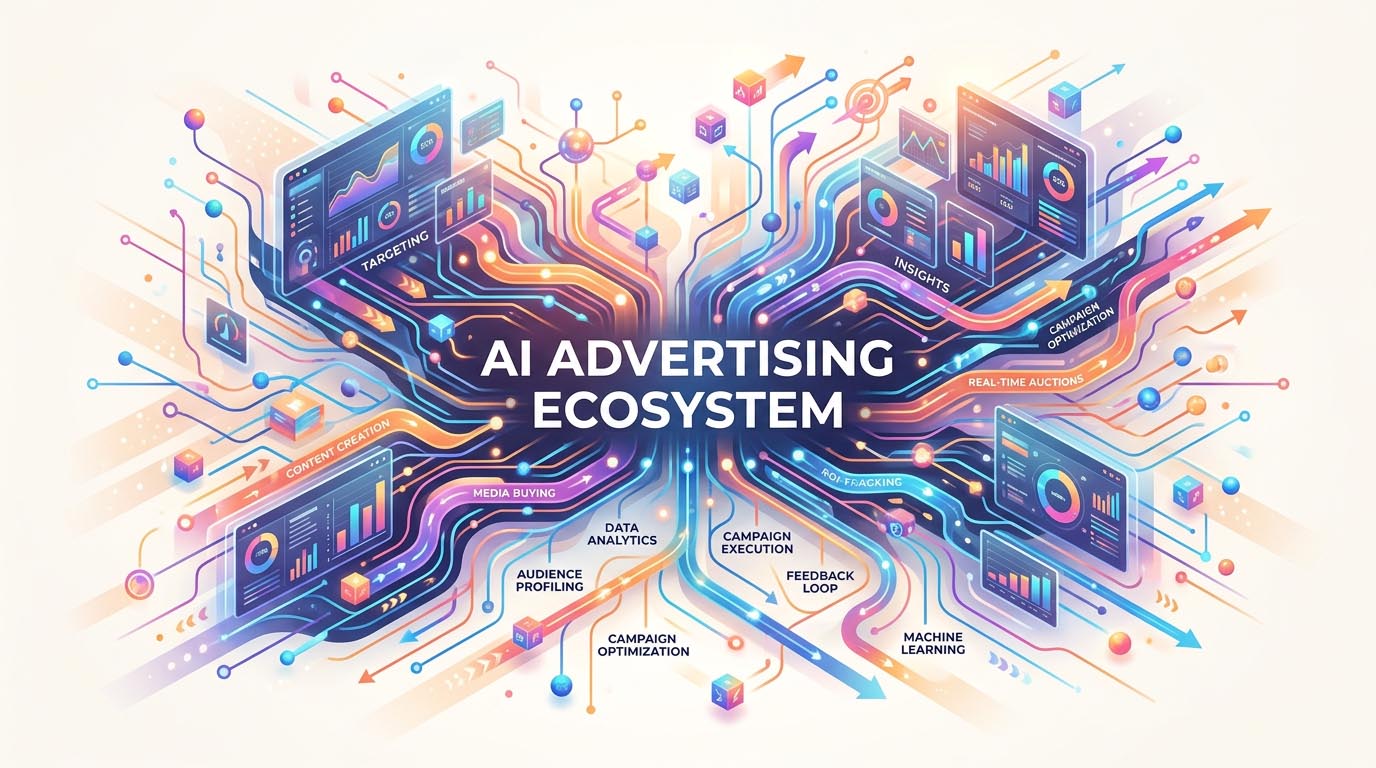
We have seen digital advertising evolve in waves. From the early days of static banners and keyword bidding to the rise of social media targeting and programmatic buying, each technological shift has expanded what brands can do and how fast they can do it.
With the rise of artificial intelligence, we are not simply witnessing another iteration; we are seeing a fundamental redefinition of how advertising works.
What once operated as a sequence of campaigns has become something far more dynamic: a continuous adaptive ecosystem of content, data, and decision-making.
This shift is as exciting as it is demanding. It opens unprecedented opportunities for relevance, efficiency, and growth. But it also requires a new way of thinking that goes beyond traditional campaign logic and embraces AI as a creative and strategic operating system.
The End of the “Campaign” as We Knew It
Historically, a brief was written, creative assets were produced, media was booked, and performance was measured after the fact. This model was shaped by human limitations: time, resources, and the mechanics of media buying.
AI removes those constraints.
Content can be generated, tested, and optimized in real time. Messaging no longer needs to be fixed for weeks or months; it can evolve continuously in response to audience feedback.
In practice, this means the concept of a “campaign” is giving way to something more fluid: an always-on system that learns and adapts every day.
Our clients are no longer launching messages. We help them build environments where messages continuously emerge, improve, and refine themselves.
From Creative Assets to Content Architecture
In this new landscape, the focus shifts from producing individual pieces of creative work to designing content systems.
Instead of a single headline, there are dozens. Instead of one visual direction, there are multiple variations. Tone, messaging, format, and context become modular components that AI can assemble and reassemble depending on who is viewing the content, where they are, and what they are responding to in that moment.
This approach requires a different way of thinking: less about crafting a perfect execution and more about building a flexible architecture that enables experimentation, personalization, and continuous improvement without sacrificing coherence.
The brands that succeed are not those producing the most content, but those structuring it intelligently.
Audience Understanding Becomes Fluid
Another profound change lies in how audiences are defined.
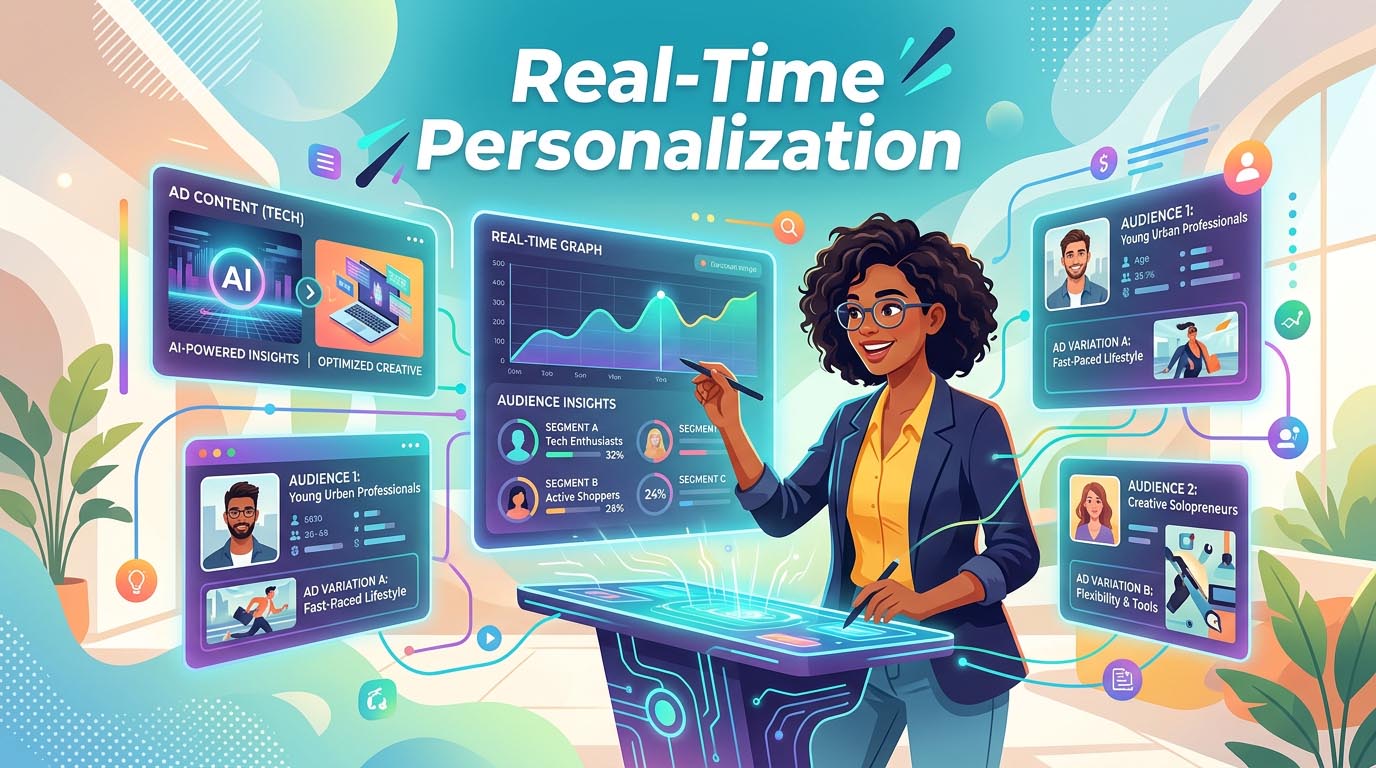
Traditional segmentation (age groups, demographics, broad interests) is giving way to something far more nuanced. AI systems interpret signals in real time: behavior, intent, context, even subtle shifts in engagement patterns. Instead of targeting predefined segments, brands can respond to individuals as they interact.
This creates a powerful opportunity for relevance, but it also raises the bar for data strategy. To take advantage of AI-driven personalization, brands need richer inputs: meaningful audience insights, contextual awareness, and a clear understanding of what drives engagement and conversion.
Without strong data foundations, even the most advanced AI tools will underperform.
Visuals Become a Living Hypothesis
In an adaptive system, creative work is not a fixed statement. It becomes a hypothesis, something to be tested and refined. AI can generate and compare thousands of variations, but it cannot decide what a brand stands for. That responsibility remains firmly human.
The role of creative strategy becomes more critical than ever. It is not about deciding exactly what to say, but about defining the parameters within which the brand can express itself. What tone is acceptable? What values must always be present? What boundaries should never be crossed? These decisions form the foundation upon which AI operates.
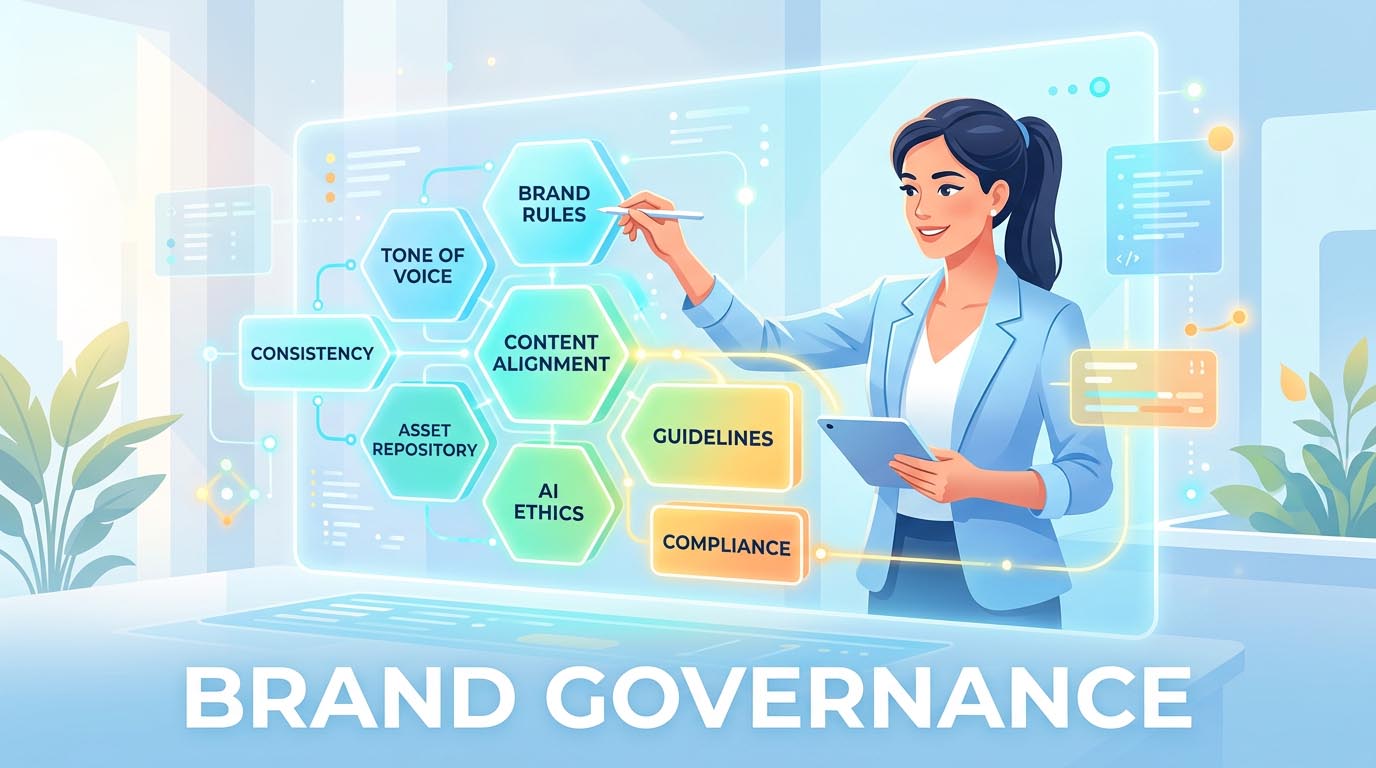
Why Brand Governance Matters More Than Ever
As personalization scales, so does the risk of fragmentation.
If an AI system is optimizing purely for performance without clear guidance, it can quickly drift away from a brand’s identity. What begins as tailored messaging can become inconsistent, or worse, unrecognizable.
To prevent this, your brand needs strong governance frameworks: clear guidelines for tone, visual identity, and messaging principles. Think of it as a “brand constitution”, a set of rules that ensures every variation, no matter how personalized, still feels unmistakably on-brand.
In the age of AI, consistency is not achieved through control of individual assets but through clarity of system design.
Measurement Must Evolve Alongside Creativity
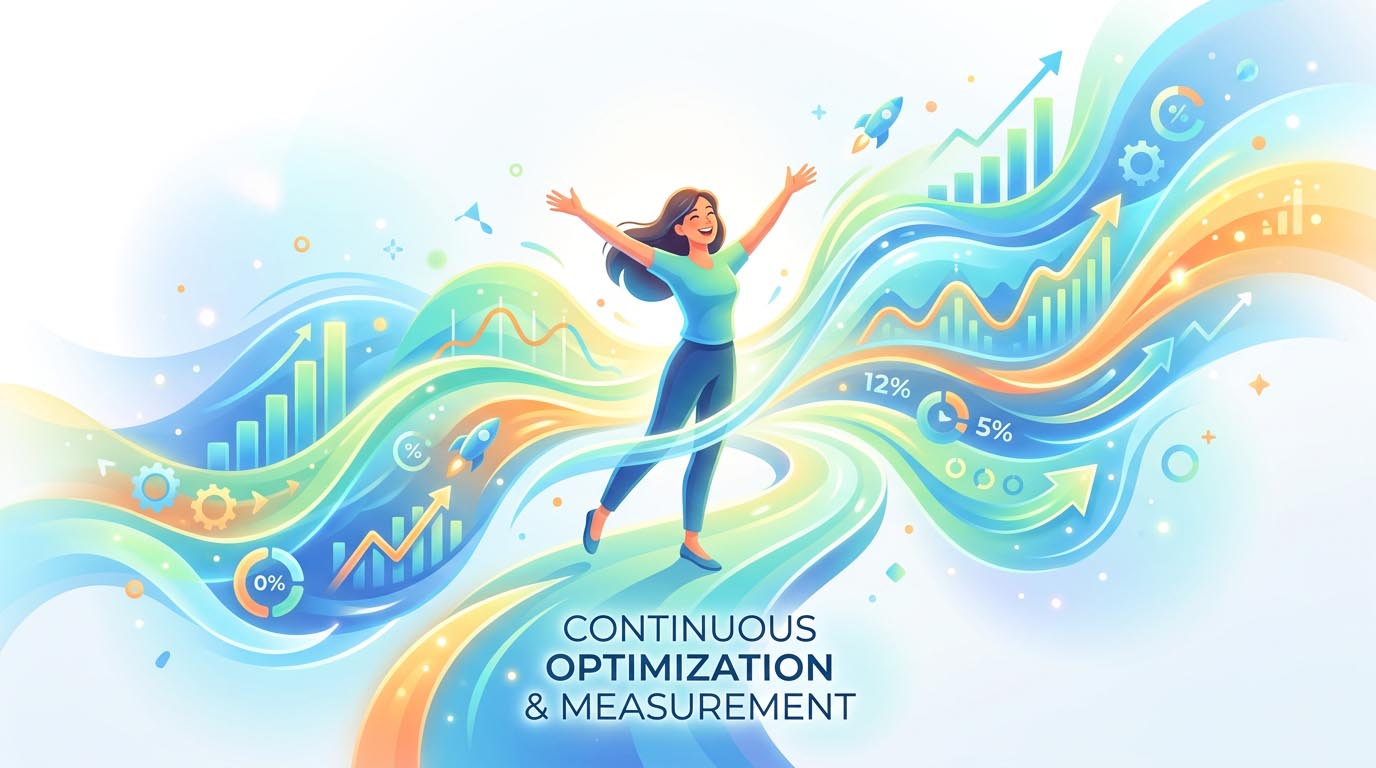
The transformation does not stop at content creation. Measurement must evolve as well.
Traditional reporting models were built around campaign timelines—launch, monitor, analyze, conclude. But in an always-on ecosystem, there is no clear beginning or end. Performance is continuous, and so must be analysis.
Brands need real-time feedback loops that connect creative decisions directly to business outcomes. This means integrating analytics deeply into the content system itself, allowing insights to instantly inform future variations.
Success is no longer measured after the campaign. It is measured and improved continuously.
The Strategic Opportunity for Brands
All of this leads to a crucial realization: AI does not reduce the importance of strategy. It amplifies it.
When technology can produce content at scale, the competitive advantage shifts to those who define better systems. Positioning, audience insight, creative direction, and data integration become the levers that truly matter.
Brands face a choice. They can experiment with AI tools in isolation, gradually piecing together a coherent system. Or they can approach AI strategically from the outset, building an integrated ecosystem that evolves and performs.
The difference between these approaches often lies between incremental improvement and transformative growth.
Why the Role of Your Agency Is Changing
Our team does not just produce campaigns or deliver creative assets. Our role is to design intelligent systems—architectures that combine technology, data, and creativity into something greater than the sum of its parts.
After more than 20 years navigating shifts in digital advertising, one thing remains clear: every technological leap rewards those who adapt early, but it truly benefits those who adapt thoughtfully.
AI is not simply a tool to be adopted. It is an ecosystem to be designed.
And designing that ecosystem requires experience, perspective, and a deep understanding of both brand building and technological innovation.
An Invitation to Build What’s Next
AI offers extraordinary capabilities, but realizing its full potential requires more than access to technology. It requires a clear vision, a structured approach, and the ability to align all the moving parts into a cohesive whole.
Whether you are beginning to explore AI or looking to scale what you have already built, the question is not whether to adapt, but how.
And that is a conversation worth having.
Ready to take your brand to the next level? Our team of web experts in Sofia, Bulgaria, is excited to dive into your needs and start building something great together. Ask us for a quote.