


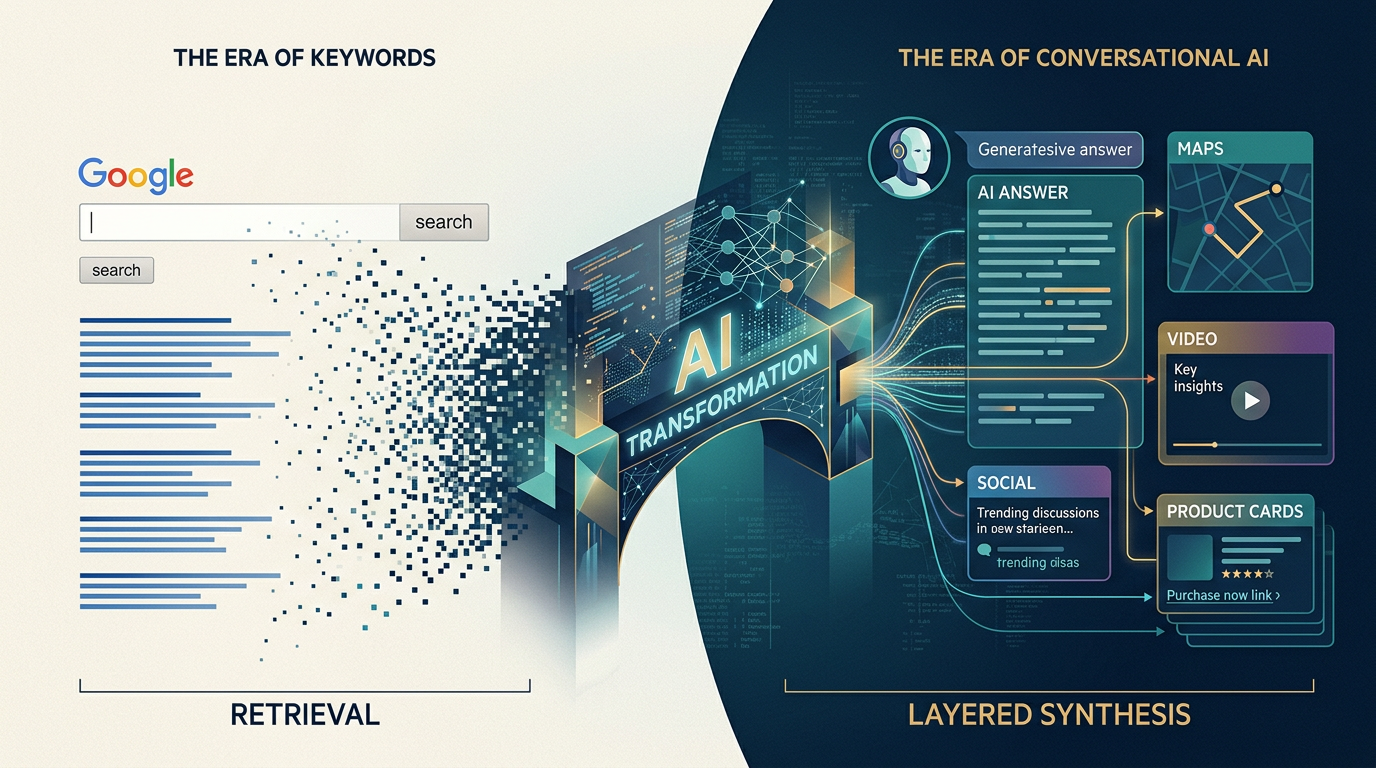
Over twenty years ago, when we founded eDesign, digital discovery was simple.
Someone had a question. They opened a browser. They typed a few keywords into Google. Brands fought for rankings, won clicks, and built entire marketing strategies around a single destination.
That world no longer exists.
Today, customers might discover your brand through ChatGPT while planning a vacation. They might ask an AI assistant for the best software provider in their industry. They might search Google Maps while standing on a city street. They might find you through a YouTube recommendation, an Instagram search, an AI-generated answer, a Reddit discussion, a product comparison engine, or a voice assistant in their car.
Search hasn't disappeared.
It has exploded.
One of the most important shifts happening in digital marketing isn't the rise of AI. It's the fragmentation of discovery.
People now search everywhere.
And brands that continue optimizing for a single search engine are increasingly invisible in the places where buying decisions actually begin.
Consider what happens when someone wants to renovate their home. They may ask ChatGPT for design inspiration. They might browse Pinterest for ideas. They could watch YouTube reviews, search Google Maps for local contractors, read Reddit discussions, compare businesses on review platforms, and only then visit a company website.
The customer journey no longer follows a straight line.
It resembles a web of micro-searches happening across dozens of platforms.
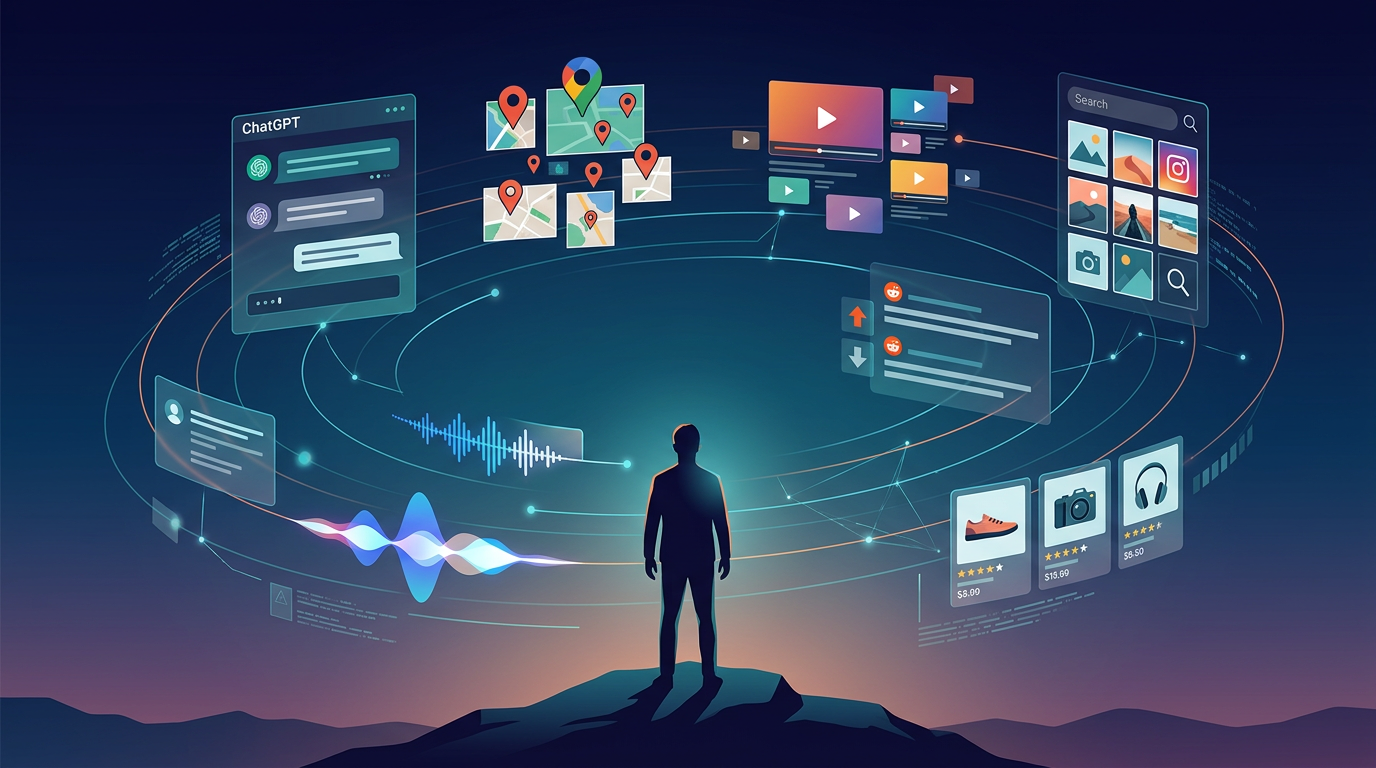
Research from Gartner predicted that traditional search engine volume would decline by 25% as users increasingly turn to AI assistants and virtual agents for answers. The prediction was controversial when it was published. Today, it feels less like a forecast and more like a description of reality.
Meanwhile, Google itself is transforming search into an AI-powered experience. The company reports that AI-generated search experiences are driving more complex questions and changing how people interact with information online. Search is evolving from a directory of links into a conversational discovery engine.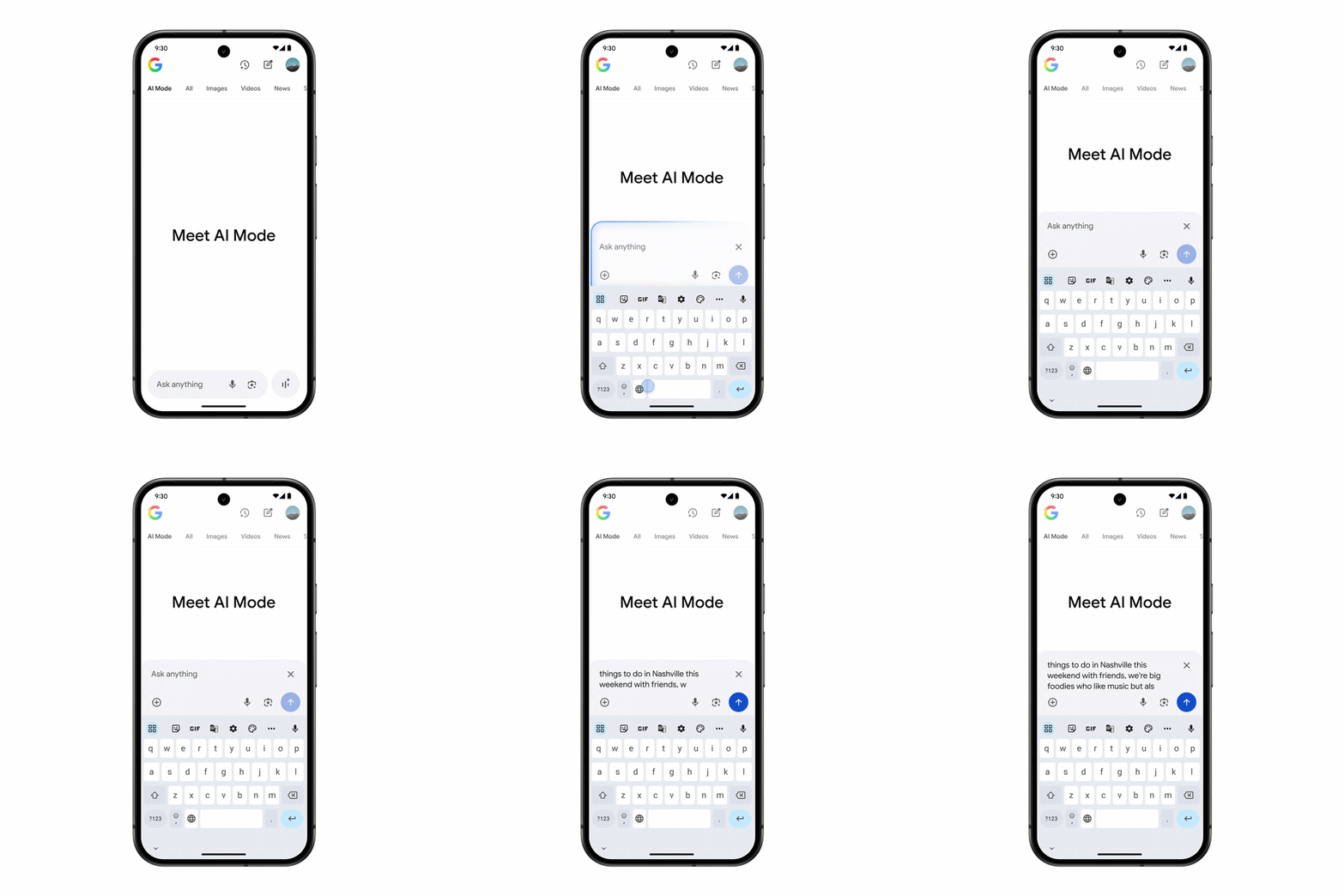 For your brand, this changes everything.
Your marketing team should not be asking us, "Do we rank on Google?"
You should ask, "Can we be found wherever people are looking?"
Because people are looking in places marketers didn't worry about five years ago.
A restaurant may never appear in a Google search result, yet still win customers through Google Maps. In fact, recent consumer research found that one in five local searches now begins directly inside mapping applications.
A software company might receive recommendations from AI assistants without a user ever visiting a search engine.
A retail brand may be discovered through social search before its website receives a single click.
A manufacturer may appear in an AI-generated answer because its content is structured, authoritative, and easy for machines to understand.
Visibility is no longer a ranking problem.
It's a discoverability problem.
This is where many brands are struggling.
Most organizations still think in channels: SEO team. Social team. Content team. Paid media team. Website team.
But consumers don't experience brands through channels.
They experience brands through moments of discovery.
The challenge for modern businesses is ensuring that every digital touchpoint tells a consistent story, whether it's being interpreted by a search engine, an AI model, a map application, a voice assistant, or a human being.
As search expands beyond search engines, the competitive advantage will shift from companies with the largest advertising budgets to brands that build digital ecosystems rather than isolated campaigns.
Brands whose websites are fast, structured, and authoritative.
Brands whose content answers real questions.
Brands whose locations, products, services, and expertise are consistently represented across the entire digital landscape.
Brands that understand that discoverability is a design challenge, a content challenge, a technical challenge, and a strategic challenge all at once.
The emergence of AI makes this even more important.
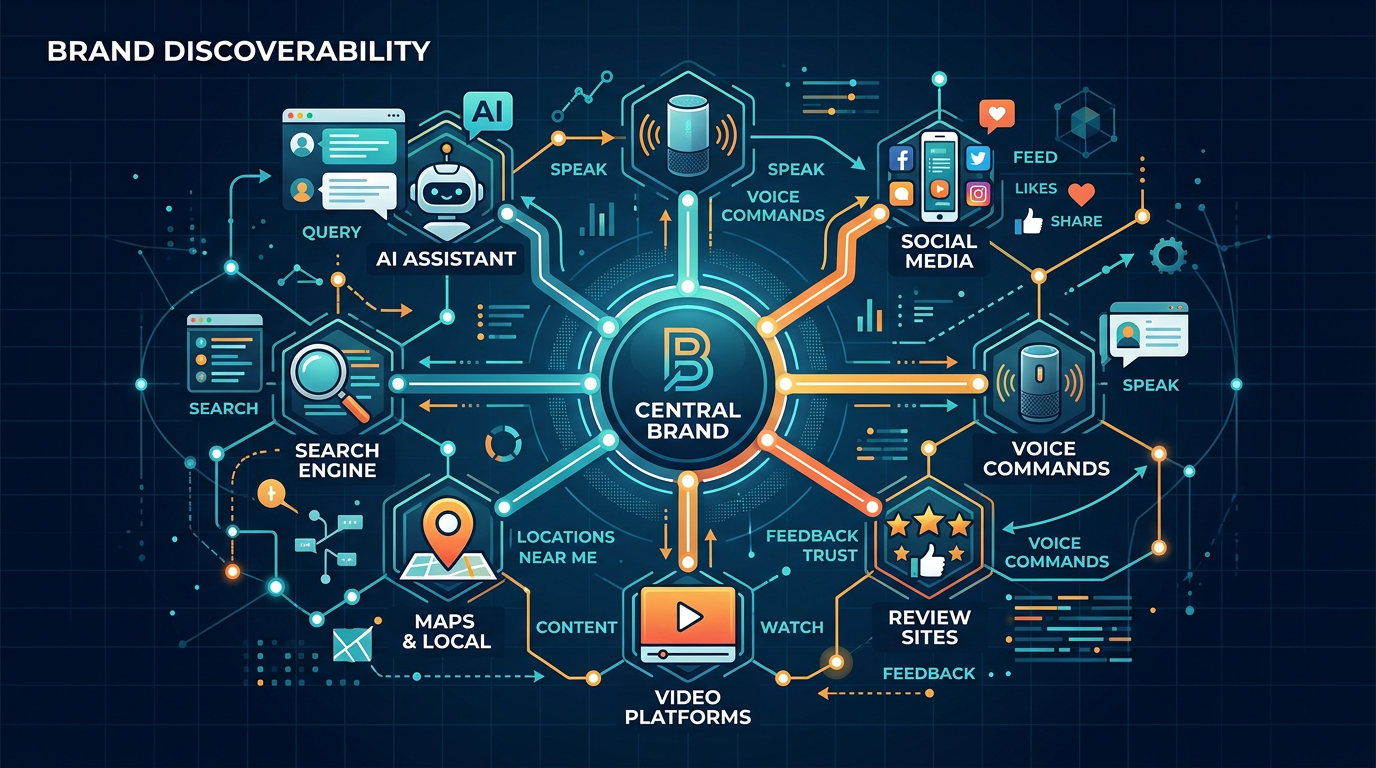
Studies examining AI search behavior show that generative engines often surface information differently than traditional search engines. The sources selected by AI systems can vary significantly from those presented in conventional search results, creating entirely new pathways for brand discovery.
In other words, being visible on Google does not automatically mean being visible in AI.
The future belongs to brands that can do both.
At eDesign Interactive, we've spent more than two decades helping organizations adapt to changing digital behaviors. We've seen the rise of search engines, mobile experiences, social platforms, ecommerce ecosystems, and now AI-powered discovery.
What we're witnessing today is not another marketing trend. It's a fundamental shift in how humans find information.
The brands that thrive over the next decade will be those that understand a simple truth: your customers are searching everywhere.
The question is whether they'll find you when they do.
If you're ready to understand how discoverable your brand really is across search engines, AI platforms, maps, content ecosystems, and emerging digital experiences, let's start a conversation.
In the age of AI, visibility isn't only about ranking first, but about being present everywhere your audience is looking.