


You wouldn’t expect a website about a rare autoimmune kidney disease to become one of the most meaningful projects we’ve worked on. But IgANime did exactly that.
When Believe Limited approached us on behalf of Vera Therapeutics, the goal was ambitious: create a digital experience for people living with IgA Nephropathy (IgAN), a rare kidney disease that disproportionately affects people of Asian descent, many of them young adults navigating an isolating diagnosis.
The challenge wasn’t just educational. It was emotional. How do you help people feel seen when they’re living with something most people have never even heard of?
The answer was anime.
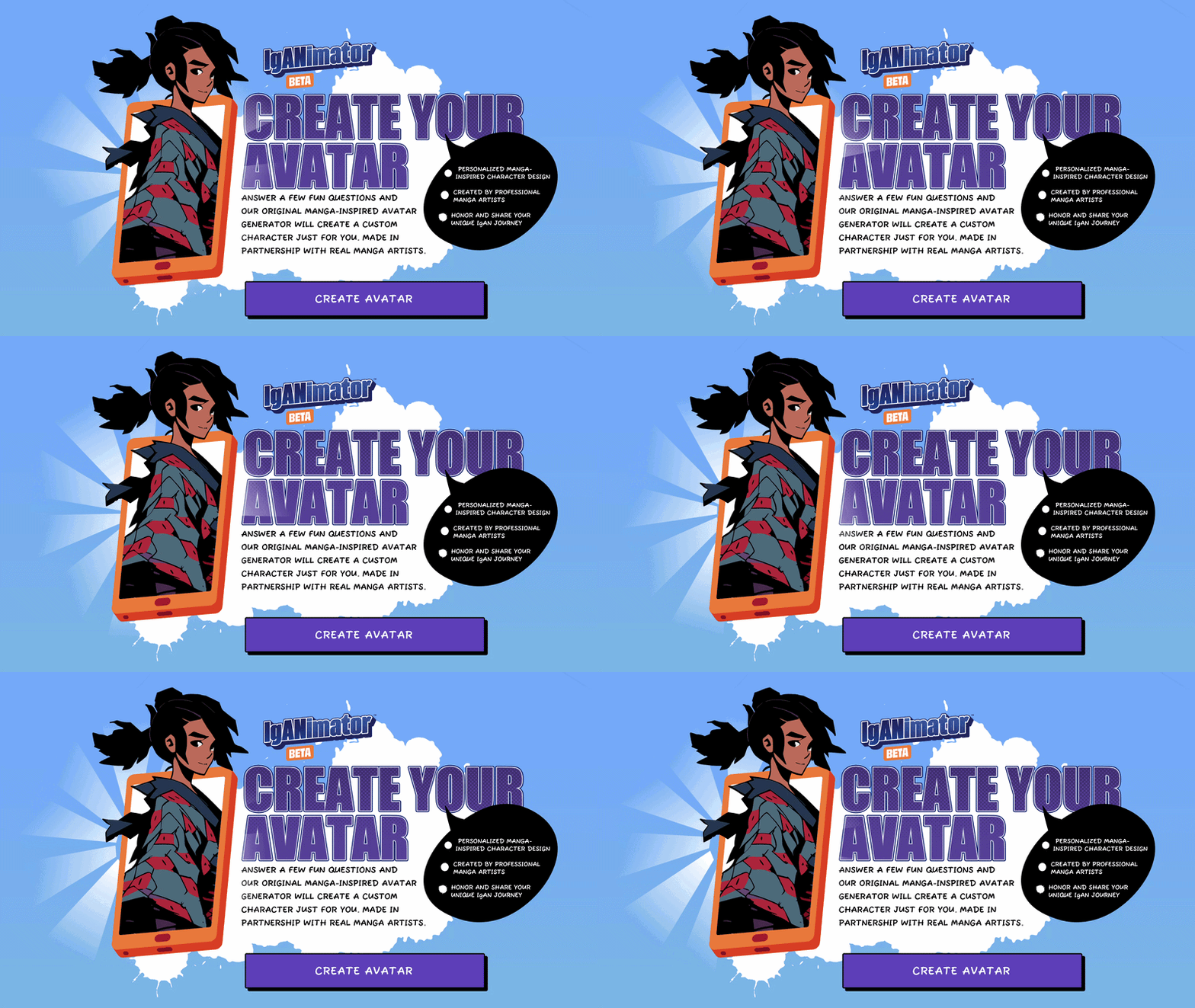
The idea clicked almost immediately. Manga and anime are deeply rooted storytelling traditions for many in the audience that Vera Therapeutics wanted to reach. Instead of building another clinical awareness site, the team imagined something more personal: a manga-inspired avatar creator that could turn someone’s experience with IgAN into a character that reflected their journey.
Not a brochure. Not a form. A mirror.
We brought that vision to life as an interactive microsite — a single-page scrolling experience featuring educational content, artist spotlights, and at its center, a custom avatar generator. Users answer a series of questions and receive a personalized manga character assembled in real time in the browser.
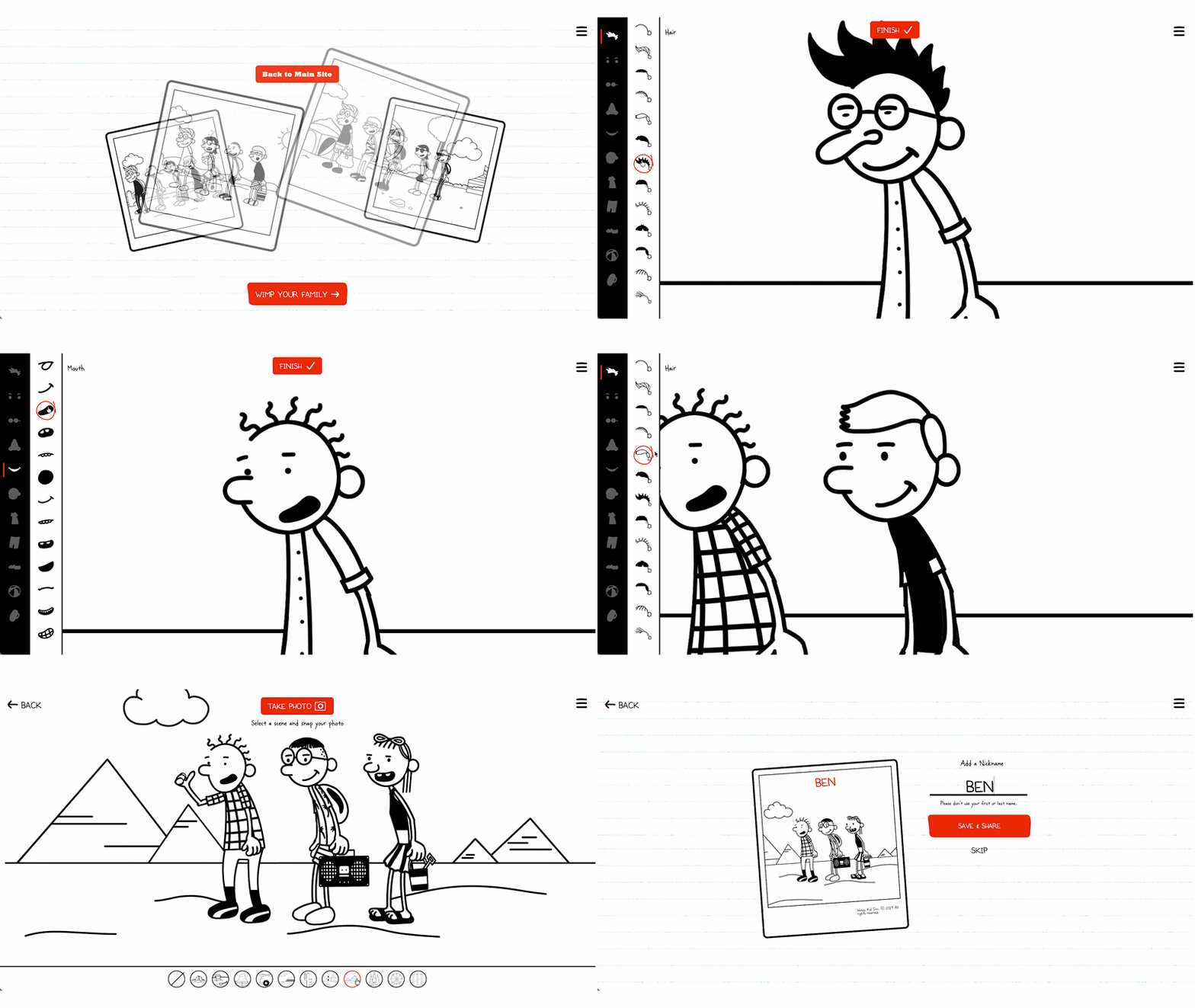
The experience reminded us of the emotional connection people formed with the “Wimp Yourself” character creator we helped integrate a few years back for Diary of a Wimpy Kid. But this time, the stakes felt different. This wasn’t entertainment. It was identity, representation, and connection.
From the beginning, authenticity mattered. Every avatar asset was hand-illustrated by a professional manga artist and her team. Nothing was AI-generated. Everyone involved agreed that if the goal was to help people feel genuinely represented, the artwork needed to come from real human hands.
Technically, the project came with equally important constraints. The microsite was built as a stateless React single-page application with no CMS, database, cookies, analytics scripts, or user tracking of any kind. In pharmaceutical marketing, privacy regulations are strict, and the platform cannot collect or store personal information.
Rather than limiting the work, those constraints forced smarter thinking. The avatar generator runs entirely through a predefined logic system, dynamically assembling character traits based on user responses without ever storing personal data. The result still feels deeply personal because it is.
The timeline was intense: roughly eight weeks from kickoff to launch. And like most pharmaceutical projects, legal and compliance reviews shaped nearly every stage. Approved copy could come back days later with revisions. Flexibility became essential.
What made the process work was the partnership. Believe acted as the bridge between our team and Vera, but it never felt like layers of bureaucracy. It felt collaborative. Ideas flowed freely, and everyone stayed focused on the same goal: creating something meaningful for patients.
And that’s what makes IgANime special. Pharmaceutical companies can’t collect patient stories or host open community discussions as many awareness campaigns do. So instead of asking people to publicly share their experiences, the campaign gives them something else: a character.
Instead of testimonials, there’s art. Instead of forums, there’s self-expression.
The message becomes simple and powerful: I’m here. This is part of my story.
That emotional layer changed how our team approached the work. When you’re designing for someone who may feel isolated or overwhelmed after a diagnosis, the details stop feeling small. You start thinking differently about every interaction, every illustration, every decision.
IgANime is already live, but the project is continuing to grow with new customization options in development.
What started as a digital awareness campaign has become something larger: a reminder that even within the strictest technical and regulatory constraints, digital experiences can still feel deeply human.
And sometimes, helping someone feel a little less alone is the most important thing a website can do.
Ready to take your brand to the next level?