


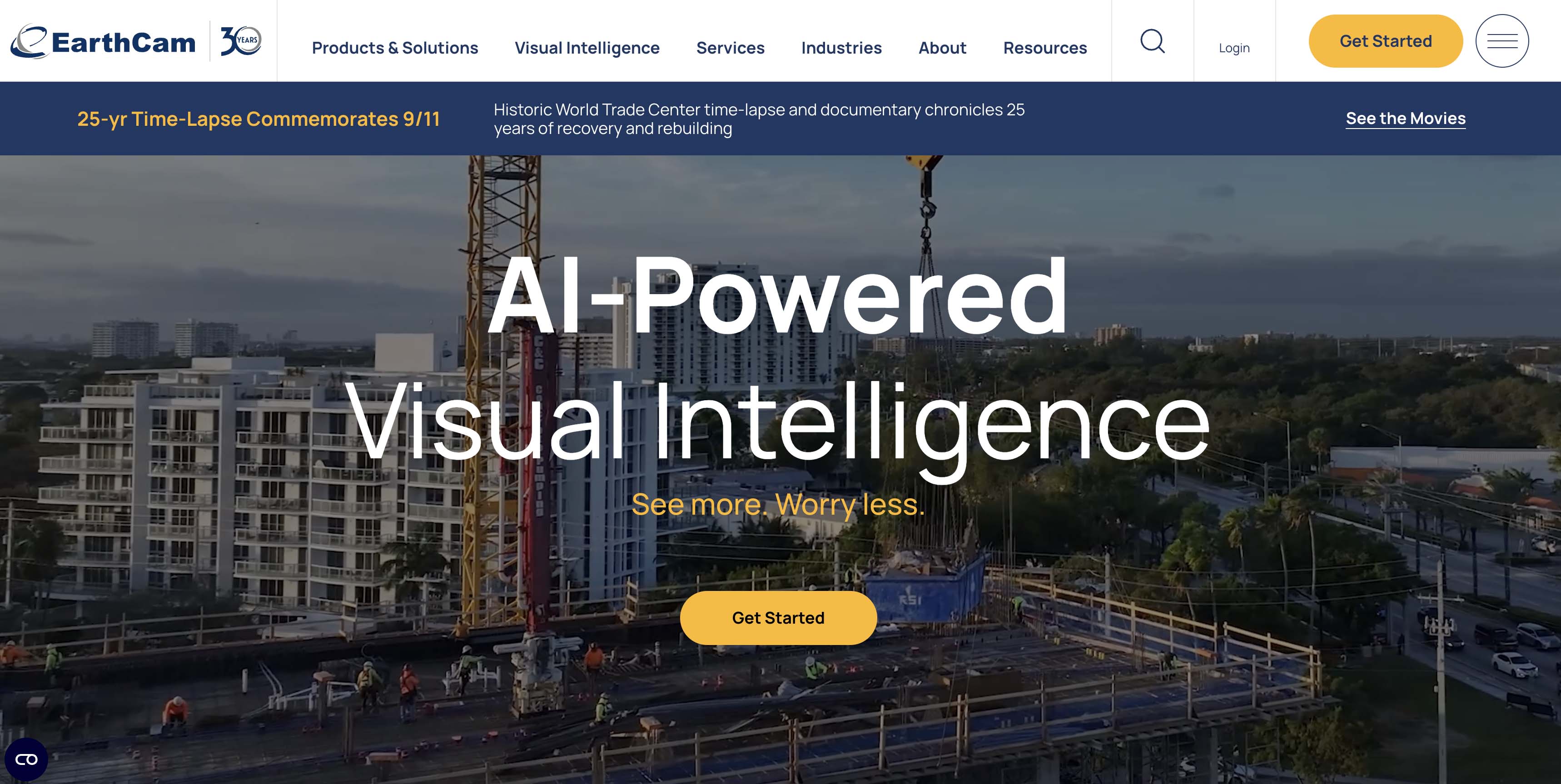
EarthCam, a global leader in live camera technology, visual content, and services for construction and other industries, came to us with thousands of hours of construction footage, dozens of camera models, multiple AI-powered technologies, 360° imagery, time-lapses, and live feeds.
Their ask was simple: build a website that could handle it all.
On the surface, the assignment sounded simple: create a beautiful new website for an established tech company.
But the challenge was much bigger.
EarthCam needed a digital experience that could instantly communicate the sophistication of its technology, while giving its marketing team the flexibility to continually add new products, stories, videos, use cases, and media formats.
The new site had to work inside the realities of a large enterprise, where security, compliance, internal IT, brand standards, and multiple stakeholders are part of the design brief from day one.
The product isn't the camera. It's what the camera sees.
EarthCam cameras sit on some of the world's largest and most complex construction projects. They document progress, monitor safety, capture milestones, provide security, and increasingly feed AI systems that can understand what is happening on a jobsite in real time.
That created an unusual UX challenge.
How do you make a prospective customer understand the value of sophisticated technology without handing them a technical manual?
Our answer: let the technology speak for itself.
Instead of leaning on specs and descriptions, the new site puts EarthCam's visual intelligence front and center. Real footage, panoramic views, time-lapses, jobsite imagery. Visitors immediately see what the systems can do and why it matters.
A construction professional doesn't want to know everything a camera can do.
They want to know whether it can help them spot a safety issue, verify materials, track progress, or plug in visual information into the tools they already use.
So, we designed the experience around use cases, outcomes, and visual proof.
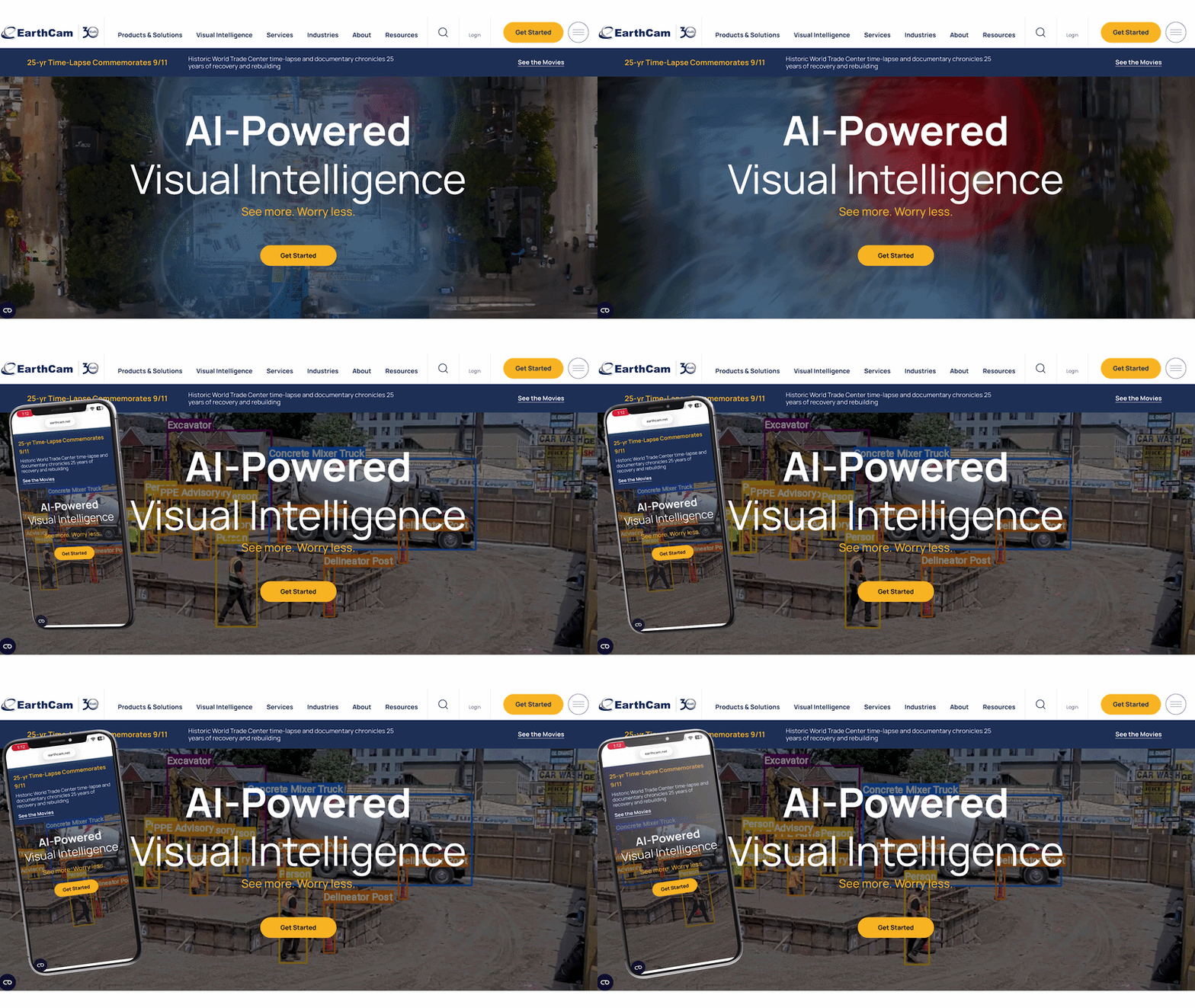
A design system built for the unexpected
The biggest challenge emerged from something deceptively simple: media.
EarthCam had an enormous library of visual content, and it wasn't all the same shape.
There were landscape videos. Portrait videos. 360° experiences. Photography. Time-lapses. Product imagery. Construction footage. Editorial content. Webinars. Success stories.
A rigid page template would quickly become a limitation.
So, instead of designing pages, we designed a system for building pages: a set of flexible, drag-and-drop content components that EarthCam's marketing team can assemble however each story demands.
That distinction matters. The visual language stays consistent, while new content created by EarthCam's team can evolve.
A product launch doesn't have to look like a case study. A 360° jobsite tour doesn't have to squeeze into the same box as a portrait video. A webinar doesn't have to fight a product page for hierarchy.
That became one of the project's most important measures of success: could EarthCam keep building the site after launch without breaking the experience we had created?
The answer had to be yes.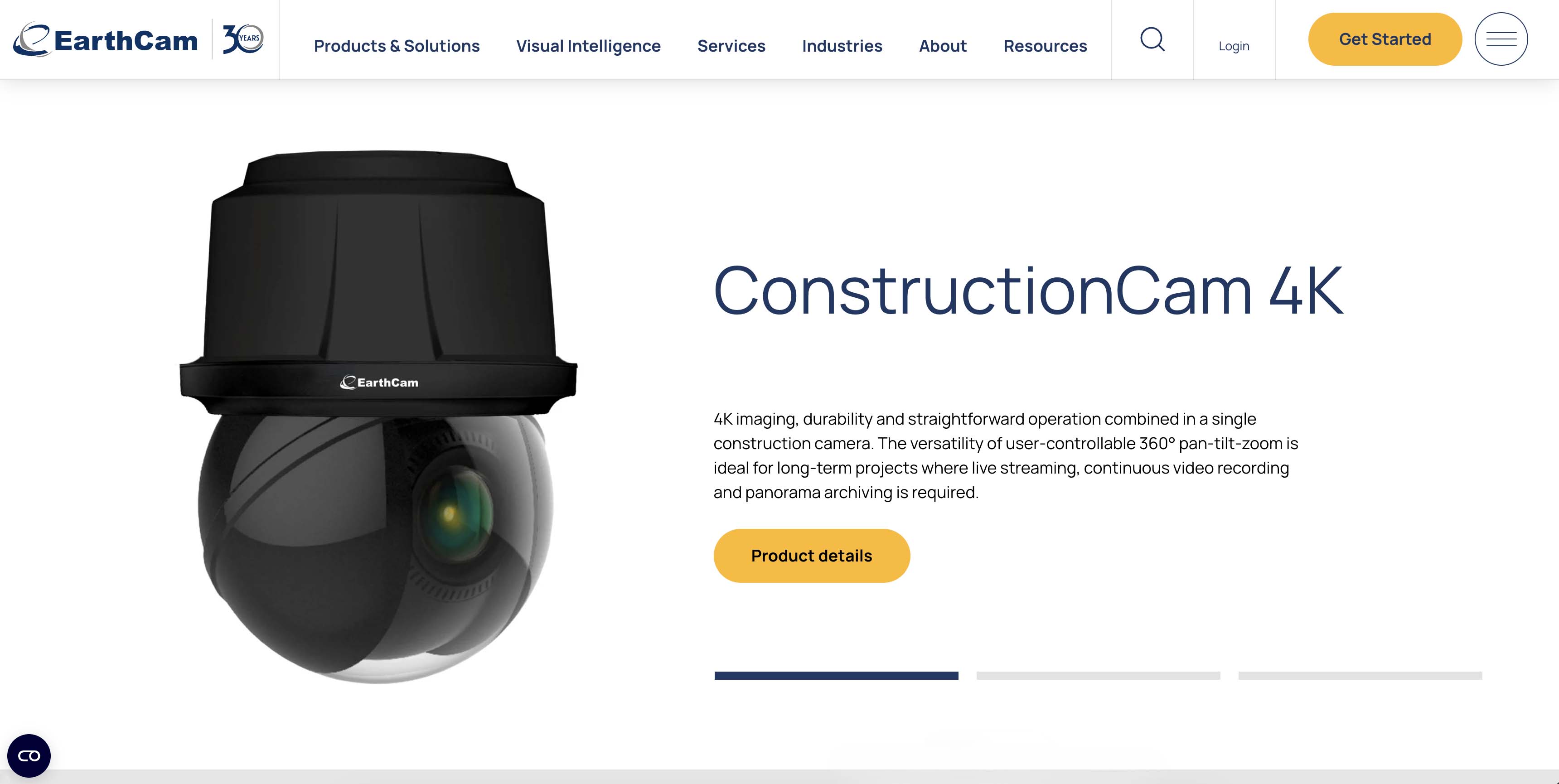
When enterprise collaboration becomes part of the design
When you work with a large corporation, you learn fast: great digital work is never built in isolation.
EarthCam brought its own IT, marketing, and design expertise, plus strict security and compliance requirements linked to the nature of its business.
Even though the website itself doesn't handle sensitive user data the way a surveillance system might, the organization operates within a security-conscious environment. Therefore, our team worked hand in hand with EarthCam's internal stakeholders to meet every technical and compliance bar.
This added another dimension to the project.
The job wasn't to hand over a finished design and walk away. It was to build a shared language across UX, visual design, front-end, back-end, project management, marketing, IT, and EarthCam's own teams.
That collaboration is often where enterprise projects are won or lost.
The first design wasn't the last, and that's the point
One of the biggest lessons: our initial design system couldn't yet hold the full breadth of EarthCam's vision. There was simply too much content, in too many forms.
As we moved deeper into the project, new requirements and media formats exposed places where the system needed to flex. We treated every one of those moments as a chance to strengthen the design, not a detour.
This is one reason we believe good project management is inseparable from good design.
At one point, our team worked through 200 tickets of client feedback. The volume wasn't the hard part; the interpretation was. What was the client really trying to achieve? Which requests pointed to a real UX problem, and which were just preferences? Which meant a component needed more flexibility? Which would affect development or create problems for the marketing team six months post-launch?
Our project management was the connective tissue holding it all together: understanding EarthCam's business, translating that into design, and making sure every solution was not just well-designed but buildable.
That level of involvement is something we're particularly proud of.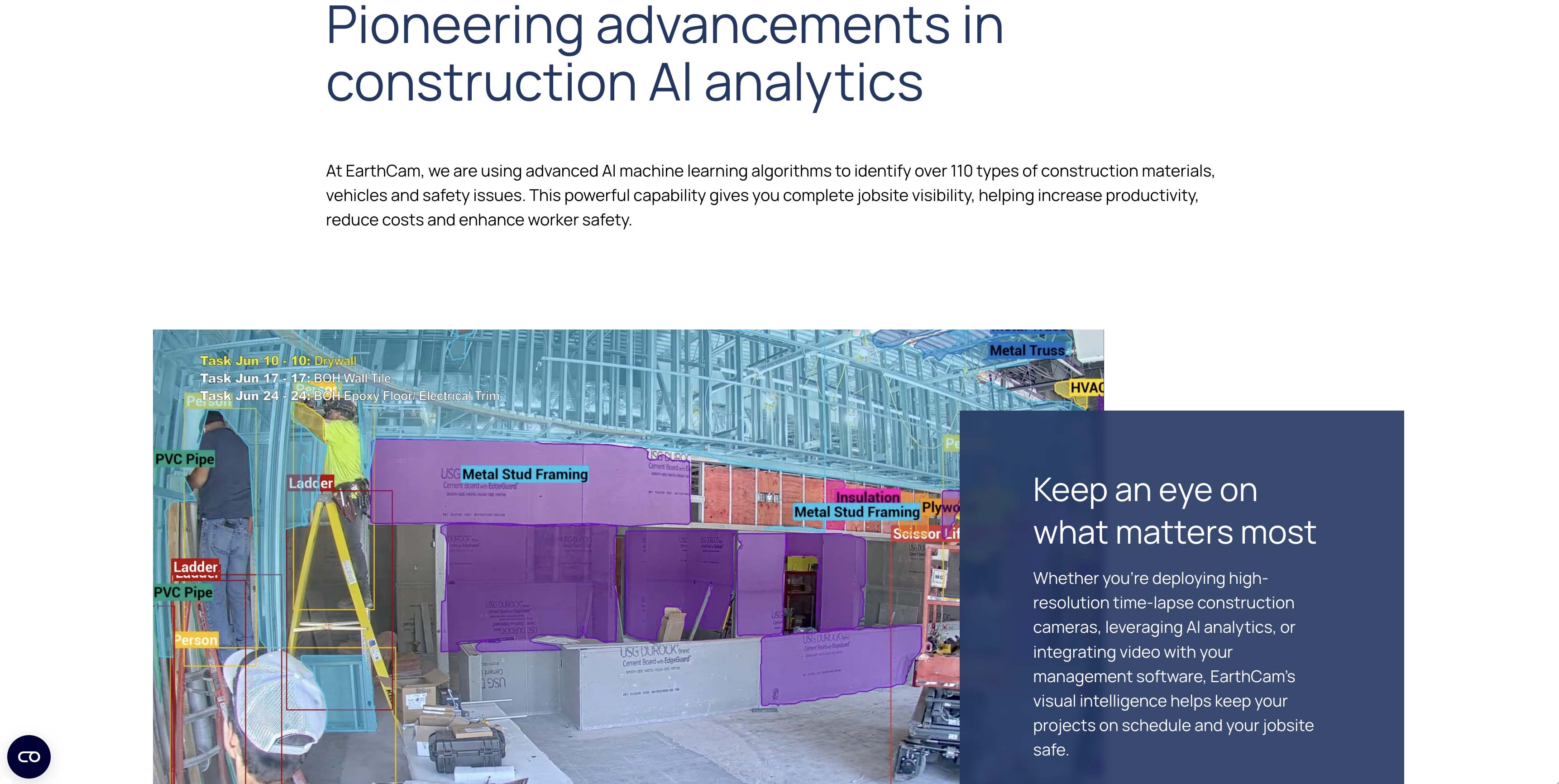
We like complicated projects
Not because complexity is easy. Because it forces us to become better partners.
EarthCam was a new relationship for us, but the challenges weren't unfamiliar.
We've worked with organizations where technology, security, compliance, and scale sit at the core of the business, including cybersecurity firms like Synack, financial institutions like American Express, and construction leaders like Turner Construction.
That experience taught us enterprise design isn't about getting everyone to agree on version one. It's about building a process where different teams can contribute their expertise without losing sight of the bigger picture.
That requires patience. Strong project leadership. Designers willing to rethink an idea. And a client willing to collaborate, not just hand over a brief.
EarthCam brought all of it.
A website built to grow with the company
The most satisfying part of this project isn't what the site looks like today. It's what it can become tomorrow.
EarthCam keeps evolving. Advanced camera hardware, AI-powered visual intelligence, automated safety alerts, material analysis, jobsite health insights, smarter time-lapses, integrations with construction platforms. The website had to evolve with it.
That meant building a foundation for a company whose technology and content will never stop changing.
The result: a site that makes a sophisticated business easy to understand without oversimplifying it, giving prospects a faster path from "What is this?" to "I can see exactly how this helps my project." And it gives EarthCam's marketing team the freedom to keep telling that story, on their own terms.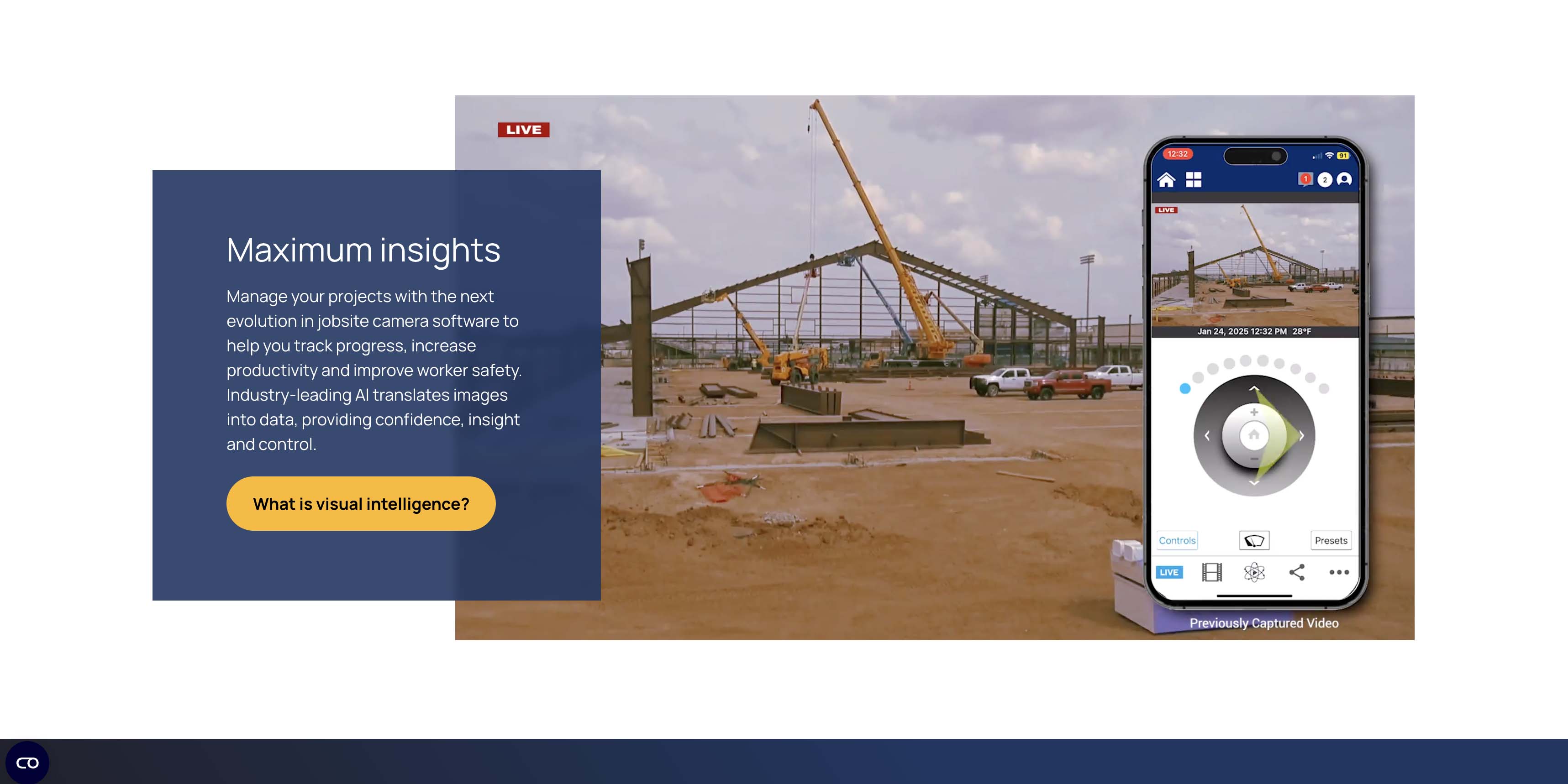
The bigger lesson
The most interesting website projects aren't always the ones with the most elaborate visual effects.
Sometimes the real design challenge is hidden underneath.
Making a complex business instantly understandable. Balancing brand consistency with creative freedom. Building flexibility without losing structure. Navigating enterprise security and compliance without compromising the experience. And forging a relationship strong enough to survive hundreds of pieces of feedback, evolving requirements, and the inevitable surprises that appear when a large organization begins seeing its new digital experience come to life.
For us, EarthCam was never just about building a website. It was about building a system that keeps working for the business long after launch.
And judging by the response from EarthCam’s team, that's a system worth watching.
Ready to build what’s next?
Whether you’re rethinking your website, connecting digital experiences across your business, or looking for a smarter approach to digital advertising, we can help.
Let’s talk about your goals and where you want to go next.