


By Kevin Cale, Executive Director, Experience Strategy & Innovation.
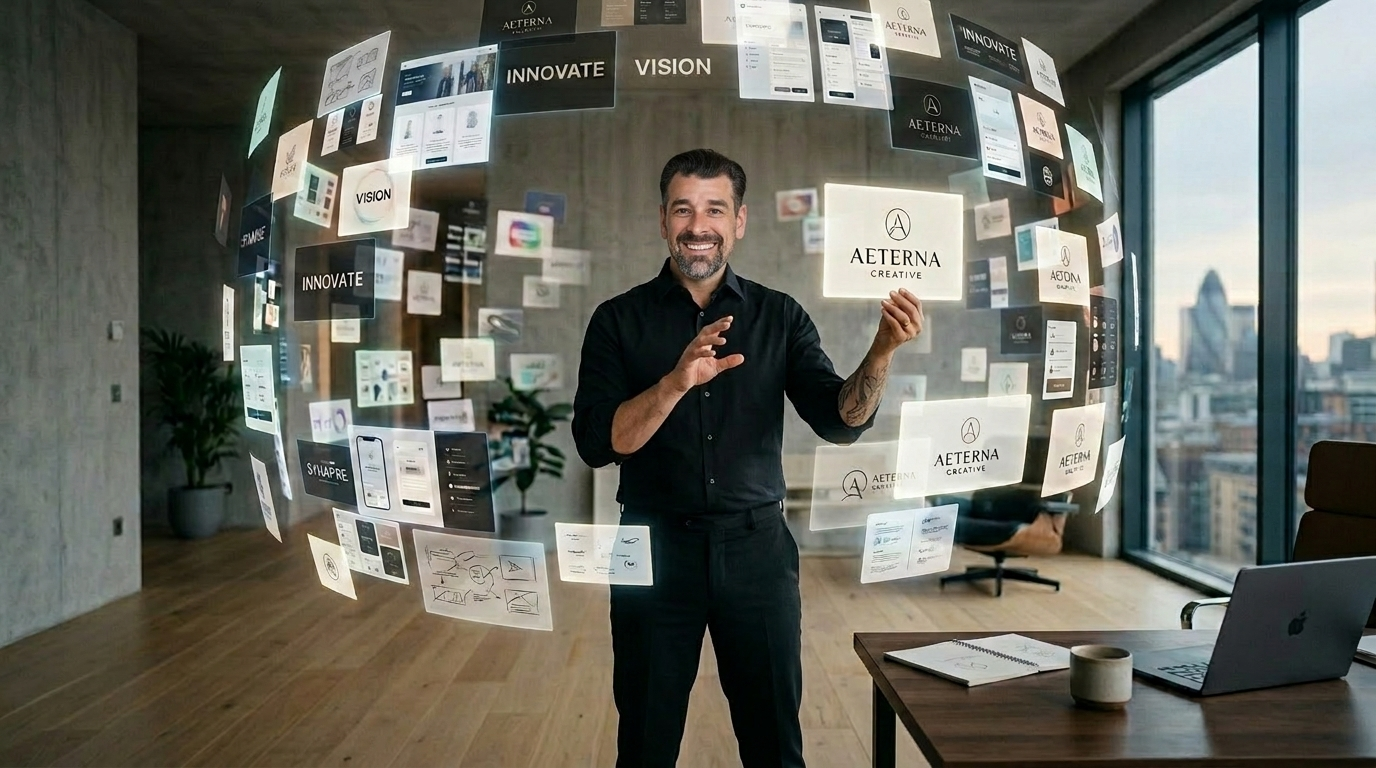
The first time I watched a designer spin up twenty logo directions with AI in under five minutes, I had two thoughts:
- This is wild.
- If everyone can do this, how do we stand out?
We now live in an era of idea abundance. The question is no longer “Can we make something?” It is “Can we tell if any of this is actually good?” AI can remix styles and generate endless options, but it does not know which one deserves to exist. It does not feel the difference between forgettable and goosebumps.
That gap is where human taste lives.
Not taste as in “I like this color better than that one.” Taste as in the practiced ability to recognize what will resonate with real people, in a real context, at this moment in culture. Taste is the instinct that separates plausible from powerful.
In a world where everyone has the same tools, taste is starting to look a lot like strategy. And the best agencies are the ones that know how to push AI hard, then bring a sharp creative eye and design taste to decide what is truly worth shipping.
The Human Gap AI Cannot Cross
AI is excellent at “could.” It can show you a thousand things you could say, design, or publish. It is not excellent at “should.” It cannot reliably answer questions like:
● Should this story be quiet or bold?
● Should this design feel familiar or slightly strange?
● Should this moment surprise someone, or reassure them?
Those are judgment calls that live in human experience, cultural context, and a sense of what feels right for a specific audience. AI can predict patterns, but it does not care if a piece of work actually moves someone.
So you end up with an odd tension. AI has solved the speed and volume problem. It has not solved the “is this actually meaningful?” problem. That is why taste is becoming the new bottleneck and the new advantage.
The agencies that stand out are not the ones that simply bolt AI onto an old process. They are the ones that combine strong AI fluency with a very human ability to sense what is good, what is bad, and what will resonate with the people it was created for.
Good Taste As a Strategic Filter
Think of taste as a high-quality filter sitting on top of your AI stack.
AI can pour out variations. Taste decides:
● Which ideas feel alive instead of generic
● Which executions feel true to the brand instead of copycat
● Which choices will likely connect with the people you actually want to reach
Great taste shows up in a few specific ways:
● Curation. Knowing what to ignore, not just what to ship.
● Timing. Sensing when an idea is early, late, or perfectly timed.
● Context. Understanding how something will land in a crowded feed or a complex buying journey.
● Courage. Choosing the direction that feels a little risky, but deeply right.
This is very different from simply making things “look nice.” It is about consistently picking the few ideas, messages, and experiences that have a real shot at landing in someone’s memory.
The best agencies use AI to widen the field of options, then rely on a strong creative eye and deep design taste to narrow down the work that actually matters.
Taste Plus Experience: Where the Real Moat Lives
Taste on its own is not enough. The best idea in the room still fails if the experience is clumsy, generic, or inauthentic.
What really differentiates brands now is the combination of:
● A strong creative eye and design taste
● Experiences that are emotionally smart, personalized in meaningful ways, and honest about what the brand is and is not
AI can help assemble the pieces of a journey. It can personalize at scale, suggest copy variations, and generate visuals. But it does not know:
● When to hold back personalization so it does not feel creepy
● Where a small human detail will create connection
● How to balance surprise and clarity so someone feels guided, not manipulated
That is still human terrain. The best agencies treat AI as a powerful assistant, then let human taste and experience design shape the flow, the tone, and the tiny details that make an experience feel “this was made for me” rather than “this was mass produced.”
Why This Matters for eDesign
At eDesign, this is the space we care most about occupying.
We use AI to explore more ground, move faster, and prototype a wide range of directions. Then we slow down and let taste lead. That means:
● A creative team with a strong eye for what good digital design actually looks and feels like
● Strategists and UX designers who think about how an idea will resonate with the people on the other side of the screen
● A culture that values authenticity and emotional connection as much as efficiency
Plenty of teams can plug tools into their workflow. The strategic advantage comes from knowing which AI outputs to ignore, which to refine, and which have the spark that can be turned into a truly memorable experience for a specific audience.
So, Is Taste the New Strategy?
AI has made “making things” cheaper, faster, and more accessible than ever. That means the real competition is shifting from production to selection.
● Who can tell the difference between merely good and genuinely great?
● Who can spot the direction that feels uniquely theirs, not just algorithmically average?
● Who can translate that choice into experiences that feel personal and real to the people who matter most?
The best agencies will be the ones that answer those questions well. They will know how to use AI confidently, yet never hand it the final say. They will bring a great creative eye, a refined sense of design taste, and a commitment to work that truly resonates with the humans it was created for.
That is the taste. And in the AI era, taste is starting to look like one of the most important strategies you can invest in.
Connect with our team to see how we combine technology, taste, and experience design to create digital experiences that stand out—and actually matter.